

Selling old fleet cars one at a time can take more work than the vehicles are worth. If your Michigan business needs cash for old fleet cars, the right option depends on each vehicle’s condition, your timeline, and how much staff time you can set aside for offers, paperwork, and pickup coordination.
A clear offer and removal plan can help you avoid disrupting daily operations. A direct buyer may be practical for aging, damaged, or non-running cars, while vehicles in better condition may suit another sales route. Cash For Junk Cars Michigan buys cars in varied conditions and includes free towing for vehicles it purchases. Before making plans, ask whether it can handle multiple vehicles and confirm pickup timing for your location.
This guide explains how to compare disposal options, organize vehicle details and ownership documents, and plan for payment and removal. It also covers what to confirm before accepting an offer, so you can choose a route that fits your fleet and schedule.
Key Takeaways
- Match each vehicle’s condition, repair needs, and resale readiness to a disposal route that suits your staff capacity.
- Compare direct buyers, auctions, and individual sales to find an approach that fits your fleet and timeline.
- Prepare an inventory with each vehicle’s identifying details, condition, location, and available keys before requesting an offer.
- For cash for old fleet cars, confirm accepted vehicles, payment terms, paperwork, and pickup timing before committing.
- Plan access and identify an onsite contact in advance. Ask whether multiple vehicles or locations can be handled together.
Cash for Old Fleet Cars in Michigan: Decide What Needs to Go
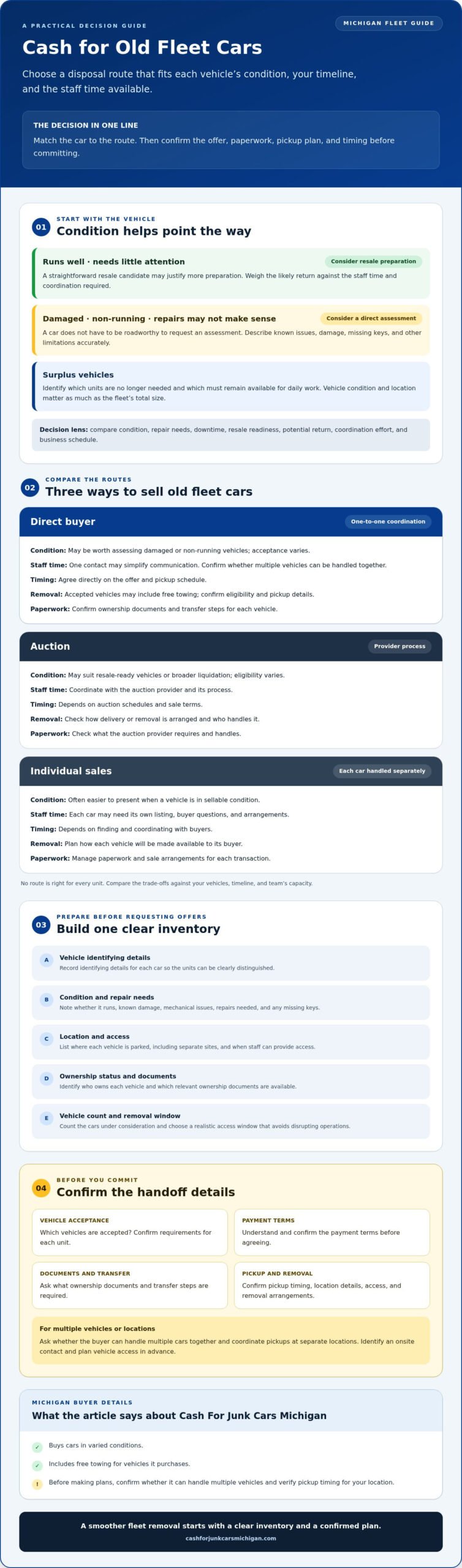
Start by sorting each car by condition, repair needs, downtime, and resale readiness. A vehicle that runs well and needs little attention may be worth preparing for resale. A damaged car, a non-runner, or a unit needing repairs that no longer make practical sense may be better suited to a direct buyer. Compare the likely return with the staff time and coordination each route requires before deciding which vehicles to sell together or separately.
A fleet can include vehicles a business owns or uses for its operations. For a neutral overview of the term, see this explanation of a fleet vehicle. When planning disposal, assess the individual units: their condition and location can matter as much as the total number of vehicles.
Which old fleet cars are candidates for a direct sale?
High-mileage, damaged, non-running, and surplus vehicles may be worth asking a direct buyer to assess. A car doesn’t have to be roadworthy to request an assessment. Describe its condition accurately, including known mechanical issues, damage, missing keys, or other limitations. Acceptance and paperwork requirements can vary by vehicle, so confirm them for each unit before deciding how to proceed.
What should a fleet manager decide before selling?
Identify the vehicles to remove and mark any units still needed for daily work. Set a realistic removal window based on vehicle access and staff availability. Then compare convenience, potential return, coordination effort, and condition. A straightforward resale candidate may justify more preparation. For a car that can’t run, a direct sale may be worth exploring. The right route is the one that fits both the vehicle and the business schedule.
Build a simple fleet inventory before seeking offers. Record:
- Vehicle count: How many cars are under consideration?
- Locations: Where is each vehicle parked, including any separate sites?
- Ownership status: Who owns each vehicle, and are the relevant ownership documents available?
- Condition: Note whether each car runs, has damage, or needs repair.
- Removal window: When can staff provide access without disrupting operations?
This list helps separate resale-ready units from vehicles better suited to a direct assessment. It also gives a buyer a clearer picture of what you’re offering. If you’re seeking cash for old fleet cars, share details for each vehicle, then confirm acceptance, required documents, and pickup timing before scheduling removal.
Direct Buyer or Auction? Compare Ways to Sell Old Fleet Cars
The right sales route depends on the vehicles, your timeline, and how much coordination your team can manage. A direct buyer, an auction, or individual listings each involve different trade-offs. NAFA’s fleet asset management resources include guidance on vehicle disposal and remarketing, which can help you clarify your priorities.
| Factor | Direct buyer | Auction | Individual sales |
|---|---|---|---|
| Condition | May be worth assessing for damaged or non-running vehicles, depending on acceptance. | May suit resale-ready vehicles or a broader liquidation; eligibility varies. | Often easier to present when a vehicle is in sellable condition. |
| Staff coordination | One contact may simplify communication. Confirm whether multiple vehicles can be handled together. | Requires coordination with the auction provider and its process. | Each car may need its own listing, buyer questions, and arrangements. |
| Timing | Agree on the offer and pickup schedule directly. | Timing depends on auction schedules and sale terms. | Sale timing depends on finding and coordinating with buyers. |
| Removal | Accepted vehicles may include free towing. Confirm eligibility and pickup details. | Check how delivery or removal is arranged and who handles it. | Plan how each vehicle will be made available to its buyer. |
| Paperwork | Confirm required ownership documents and transfer steps for every vehicle. | Check what the auction provider requires and handles. | Expect to manage the paperwork and sale arrangements for each transaction. |
When can a direct cash buyer simplify fleet disposal?
A direct buyer may be practical for damaged, non-running, or low-resale-interest vehicles that are difficult to market individually. One point of contact could reduce back-and-forth, but don’t assume a buyer can take the entire fleet or coordinate pickups at several locations. Confirm capacity, documentation, and timing first. For vehicles the buyer accepts, ask whether free towing and payment at pickup apply to your arrangement.
When might an auction or individual sale make sense?
An auction may be worth evaluating for resale-ready cars or a larger liquidation if its sale process fits your schedule. Individual listings give you direct control, but each car may need separate preparation, advertising, buyer conversations, and handover coordination. If you’re considering dismantling or selling components instead, read this guide to selling a car for parts before choosing that route.
No method is best for every fleet. Compare the likely return with staff effort, removal logistics, vehicle condition, and timing. Confirm the terms rather than assuming a particular auction result or direct offer. If a direct assessment fits your priorities, you can review vehicle purchase options and ask which vehicles and pickup arrangements can be accommodated.
How to Prepare Old Fleet Cars for a Cash Offer
A clear, accurate vehicle record helps a buyer assess each car and reduces the risk of pickup surprises. Use the same details for every unit, disclose problems, and confirm the sale terms before scheduling removal. This process works whether you’re preparing one vehicle or requesting cash for old fleet cars across several units.
Build a useful fleet vehicle inventory
Create one row per car in a spreadsheet or fleet record. Consistent information lets a buyer review each vehicle without sorting through scattered notes. Include:
- Make, model, year, VIN, and mileage
- Current condition, including known damage, missing parts, or mechanical issues
- Whether it runs and can move under its own power
- Current location, access limitations, and available keys
Take clear photos of each vehicle, including visible damage and missing components. Flag cars parked in tight spaces, behind other vehicles, or anywhere pickup access may be limited. Accurate details help the buyer assess the actual vehicle rather than an idealized version of it.
An offer depends on the vehicle and its condition, so don’t assume age or mileage alone determines its value. Review these Michigan junk car value factors for context. They can help you understand what information may matter, but they don’t predict a specific payout.
Confirm ownership documents and offer details
Before requesting a final offer, check which titles, registration records, and company authorization documents you have for each car. Mention a missing title or key upfront. A buyer may consider vehicles with missing items, but confirm acceptance and documentation requirements for each vehicle. Any transfer must meet current Michigan requirements.
Use this sequence to move from inventory to pickup:
- Review the list. Match each vehicle’s details to its records and photos.
- Request an assessment. Share the condition, location, running status, and available keys for every unit.
- Confirm accepted vehicles. Check which specific cars are included and whether multiple vehicles can be handled in one transaction.
- Verify the terms. Confirm the offer, payment method, required documents, and towing arrangements. Free towing and payment at pickup apply to vehicles the buyer accepts; confirm the details directly.
- Set the pickup plan. Agree on timing, access, and an onsite contact before staff prepare the vehicles for removal.
Keep the confirmed terms with your fleet records. Clear information and written confirmation can help your team coordinate the handoff and avoid preventable delays.
Plan Michigan Pickup, Paperwork, and Fleet Downtime
A confirmed offer is only part of the sale. Before vehicles leave your Michigan site, agree on access, pickup timing, payment, and transfer steps. A clear plan helps protect daily operations and keeps staff from scrambling to locate keys or move other vehicles at the last minute.
How can a business reduce disruption during pickup?
Choose a pickup window that avoids shift changes, deliveries, customer traffic, and times when vehicles are still assigned to work. Identify an onsite contact who can verify each vehicle and authorize access. Before confirming removal, share the cars’ locations, available keys, and any tight turns, gates, or loading-area limits.
If the fleet is spread across several sites, ask whether pickups can be coordinated and whether vehicles can be collected in one visit or need separate appointments. Don’t assume a buyer can handle several locations or units together. Confirm the schedule for your vehicle count and address, then leave enough room for access and loading.
What Michigan paperwork should sellers verify?
Check current ownership and title-transfer requirements with the Michigan Secretary of State. Requirements can depend on the vehicle and its records, so use official guidance instead of assuming general advice applies to your situation. Ask the buyer what documents are needed for each vehicle, especially if a title, key, or registration is missing. Missing paperwork does not automatically remove the need to meet Michigan requirements.
Before releasing a vehicle, make sure the transaction details are clear:
- Vehicle list: Confirm which cars are accepted and match them to the inventory.
- Payment: Ask how and when payment will be made, and confirm the terms before handoff.
- Transfer: Understand which documents must be completed and who is responsible for each step.
- Removal: Confirm towing arrangements, pickup timing, and any access instructions.
For vehicles the buyer accepts, free towing and payment at pickup may be available; confirm those terms directly. Keep a copy of the completed transaction records with your fleet files. If you’re arranging cash for old fleet cars, settle the paperwork and payment process before staff authorize removal, not while pickup is underway.
Once your schedule and documents are ready, ask about selling your fleet vehicles and confirm which units, pickup arrangements, and paperwork can be accommodated.
Get Cash for Old Fleet Cars with a Michigan Buyer
A direct purchase can be a practical route for fleet vehicles your business no longer needs, especially when removal and less coordination matter. Cash For Junk Cars Michigan buys cars, trucks, and SUVs in varied conditions, including damaged and non-running vehicles. Free towing is included for vehicles the company buys. Confirm which units it accepts, the payment terms, and the pickup schedule before committing.
For fleet sellers, convenience depends on the details. A buyer may be able to assess more than one vehicle, but don’t assume every car, location, or timeline can be accommodated. Get clear terms for each vehicle and check that they fit your business’s needs.
What to confirm before accepting a fleet vehicle offer
Review the offer against your vehicle list. Ask how the offer for each vehicle is determined and confirm exactly which units are included. If your fleet is at multiple locations, check whether the buyer can handle them within your preferred timeframe. Verify pickup arrangements, payment timing, towing terms, and required ownership documents before releasing any vehicle.
If a vehicle has missing paperwork or keys, raise that early. The company states it may buy vehicles without these items, but acceptance and document requirements must be confirmed for each case and comply with current Michigan requirements.
Request the next step for your Michigan fleet
Have your inventory ready before contacting the buyer. Include each vehicle’s make, model, year, VIN, mileage, condition, location, and available keys. Note which cars don’t run and flag any access limits. This gives the business a clearer basis to review the vehicles and discuss next steps.
Cash For Junk Cars Michigan aims to provide same-day pickup statewide, but that timing isn’t guaranteed for every vehicle or fleet. Confirm availability for your location, number of vehicles, and preferred pickup window. Ask whether vehicles from separate locations can be coordinated, and wait for confirmation before planning staff coverage or site access.
Once you have the vehicle details and preferred locations ready, Contact Cash For Junk Cars Michigan to discuss your old fleet vehicles. Confirm the accepted units, offer terms, required documents, payment, and removal plan before making a final decision. That gives you a clear picture of what will happen next.
Clear Your Fleet and Plan the Next Step
The best route for cash for old fleet cars depends on condition, resale potential, and how much time your team can give the process. Sort vehicles by whether they’re ready for resale or better suited to a direct assessment. Then prepare accurate details, verify ownership paperwork, and confirm which vehicles a buyer will accept, along with payment and pickup arrangements.
Cash For Junk Cars Michigan buys cars, trucks, and SUVs in varied conditions. Free towing is included for vehicles it purchases, with cash on the spot. The service covers Michigan and aims for same-day pickup, but availability and timing depend on the vehicles and arrangements. Confirm capacity, documents, and the pickup schedule for your fleet before committing.
Ready to discuss your vehicles? Contact Cash For Junk Cars Michigan to discuss your fleet vehicles and share your inventory details. With a clear plan, you can remove unwanted vehicles while keeping business operations on track.
Frequently Asked Questions
Can I get cash for old fleet cars that are damaged or not running?
Yes. Cash For Junk Cars Michigan buys cars, trucks, and SUVs in varied conditions, including damaged and non-running vehicles. Describe each car accurately, including damage, missing parts, and whether it can move under its own power. Before arranging pickup, confirm which vehicles are accepted and review the offer and towing arrangements for each one. Acceptance, towing logistics, and any offer depend on the individual vehicle and confirmed arrangements.
Can a Michigan buyer purchase several old fleet cars at once?
Possibly, but the company’s ability to buy several fleet vehicles in one transaction isn’t confirmed. Cash For Junk Cars Michigan buys cars, trucks, and SUVs, but don’t assume it can purchase the whole fleet, schedule one appointment, or coordinate pickups at separate locations. Send a list of vehicles with their locations and your timing needs. Ask the company to confirm which units it can purchase and how pickup would be arranged.
How much cash can I get for old fleet cars?
There’s no set amount. An offer depends on each vehicle’s details, condition, and the buyer’s assessment. To request an offer for cash for old fleet cars, prepare each car’s year, make, model, mileage, VIN, clear photos, and a description of damage or mechanical issues. Ask how the offer applies to each accepted vehicle. Confirm whether towing and payment terms apply to each one before agreeing to the sale.
What happens if a fleet car has no title or registration?
Cash For Junk Cars Michigan states it may buy vehicles without a title or registration, but requirements can depend on the vehicle and your authority to sell it. Disclose missing documents before scheduling and ask what alternatives, if any, are acceptable. Don’t assume paperwork rules can be waived. Verify current Michigan ownership and title-transfer requirements with the Michigan Secretary of State, and confirm what applies to each vehicle before proceeding.
Is towing free when selling old fleet cars in Michigan?
Cash For Junk Cars Michigan offers free towing for vehicles it buys. First, confirm that the company accepts each vehicle and that towing applies to your arrangement. Share every pickup location, explain access limits, and mention special loading needs, such as a car that can’t roll or steer. Confirm the pickup schedule directly. Free towing doesn’t apply to vehicles the company doesn’t purchase, and a specific pickup date isn’t guaranteed.
How quickly can old fleet cars be picked up?
Cash For Junk Cars Michigan aims to provide same-day pickup throughout Michigan, but that timing isn’t guaranteed. Availability can depend on your location, vehicle access, fleet size, and the schedule you agree on. Confirm a realistic pickup appointment before relying on removal to clear a lot or meet an operational deadline. For multiple cars or locations, share the full inventory and requested schedule directly, and ask what can be accommodated.