

Leaving your license plate on a vehicle you just sold is like handing a stranger your driver’s license and a blank check. In Michigan, your plate is your legal identity, not the car’s. If the buyer gets a parking ticket or causes an accident, the police come looking for you first. You need to know exactly what to do with license plates after selling car in Michigan to keep your record clean. It’s normal to feel anxious about liability, especially with the Secretary of State’s strict 2026 requirements.
This guide shows you how to legally separate yourself from the vehicle and avoid a $500 fine for improper plate use. You’ll learn how to transfer your plate for a $15 fee or properly destroy it to meet state standards. We’ll also explain the 10 year replacement rule and how to handle title transfers without the headache. Follow these steps to ensure your car sale ends with cash in your pocket instead of a misdemeanor on your record.
Key Takeaways
- Michigan law requires you to remove your license plate because it is registered to you personally, not the vehicle’s chassis.
- Leaving plates on a sold car makes you the “owner of record,” meaning you’re liable for the buyer’s parking tickets, camera fines, and accidents.
- Discover exactly what to do with license plates after selling car in Michigan, whether you choose to transfer them to a new car for a $15 fee or destroy them.
- Finalize your legal separation from the vehicle by completing a Bill of Sale and physically unscrewing the plates before the buyer drives away.
- When selling a junk car for cash, always remove your plates and personal items before the driver arrives for your free towing service.
The Michigan License Plate Rule: Why the Plate Stays With You
Michigan is a strict plate-to-owner state where the registration is tied to your identity rather than the vehicle’s metal frame. This means your legal responsibility for the car doesn’t end when you hand over the keys. It ends when you physically unscrew the plates. Michigan law dictates that license plates are registered to the individual seller, not the vehicle chassis. When ownership changes, the registration for that specific plate is effectively detached from the Vehicle Identification Number (VIN). You need to know exactly what to do with license plates after selling car in Michigan to protect your legal standing and your wallet.
Sellers are legally required to remove the plate before the buyer takes possession of the vehicle. If you leave it on, you’re essentially handing the buyer a pass to rack up fines in your name. Once the car leaves your sight with your plate attached, every red light camera and parking enforcement officer will see you as the liable party. Don’t rely on the buyer’s promise to change the registration later. Take the plate off immediately to ensure the Secretary of State (SOS) records show a clean break between you and the machine.
The Difference Between Plate-to-Owner and Plate-to-Vehicle States
In many other parts of the country, the license plate stays with the car for its entire functional life. Michigan works differently to provide better security for residents. Our system ensures that your driving record and insurance liabilities don’t follow the car to a new owner. This setup is specifically designed to protect you from automated toll booths and traffic cameras. These systems rely on the U.S. vehicle registration plates database to mail out citations. If your plate is still on the car, the bill comes to your house. The Michigan SOS tracks these owner-specific registrations so that you can easily move your “identity” from an old car to a new one without paying for a brand-new plate every time.
Legal Requirements for Private Sales vs. Dealership Trades
The law doesn’t change just because you’re at a professional car lot. Whether you’re selling a junker in your driveway or trading in a late-model SUV at a dealership, you must keep your plates. Professional dealers are usually good about this, but you should still be the one to pull the screwdriver out. Under Michigan SOS regulations, failing to properly handle your registration after a sale can lead to serious consequences. A person who fails to apply for a new registration after a transfer is guilty of a misdemeanor. This carries a penalty of up to 93 days in jail or a fine of $100. If the buyer uses your old plates illegally, the fines jump to $500 with a potential 90-day jail stay. Understanding what to do with license plates after selling car in Michigan is the only way to avoid these unnecessary legal traps.
Protecting Yourself from Liability: The Risks of Leaving Plates On
Leaving your plates on a sold car is a recipe for financial disaster. You remain the “owner of record” in the state’s database until the new owner registers the vehicle in their name. This means every parking ticket, red-light camera fine, and abandoned vehicle fee goes straight to your mailbox. Even if you have the cash in hand and the buyer has the title, the plate links you to every future mistake they make. If you want to sell your car today for cash without the stress, start by keeping your plates.
Legal liability is the biggest threat to your bank account. If the new owner gets into a serious accident while your plates are still attached, you could be named in a massive lawsuit. Many sellers fall into the “Good Samaritan” trap. They let the buyer drive home on their plates to be helpful or because the buyer doesn’t have insurance yet. This is a massive financial risk. Once that car leaves your driveway, you have zero control over how it is driven. Michigan law is clear; using improper plates is a misdemeanor that carries a fine of up to $500 and 90 days in jail. Don’t let someone else’s negligence become your legal nightmare.
Toll Road and Camera Ticket Nightmares
Toll road and camera ticket issues are common for sellers in the Detroit area. The Michigan Secretary of State shares registration data with other states to collect on toll violations. Proving you sold the car is difficult if the plate is still attached and you haven’t filed a proper bill of sale. Following the official Michigan license plate rules is the only way to avoid these headaches. It is not worth the stress of fighting a ticket from another state for a car you haven’t seen in months. Without the plate, the automated system cannot link the car back to your address.
Criminal Liability and Vehicle Misuse
Criminal liability is a much worse scenario. If the buyer uses the car in a crime, the police start their investigation at your front door. Clearing your name with the police is a long, preventable headache. You will need to provide proof of sale and a valid Bill of Sale to the authorities to prove you were not involved. This document is your second line of defense, but removing the plate is your first. Knowing what to do with license plates after selling car in Michigan keeps you out of a police interrogation room. Always record the date and time of the sale to ensure you have a clear timeline for the authorities if something goes wrong.
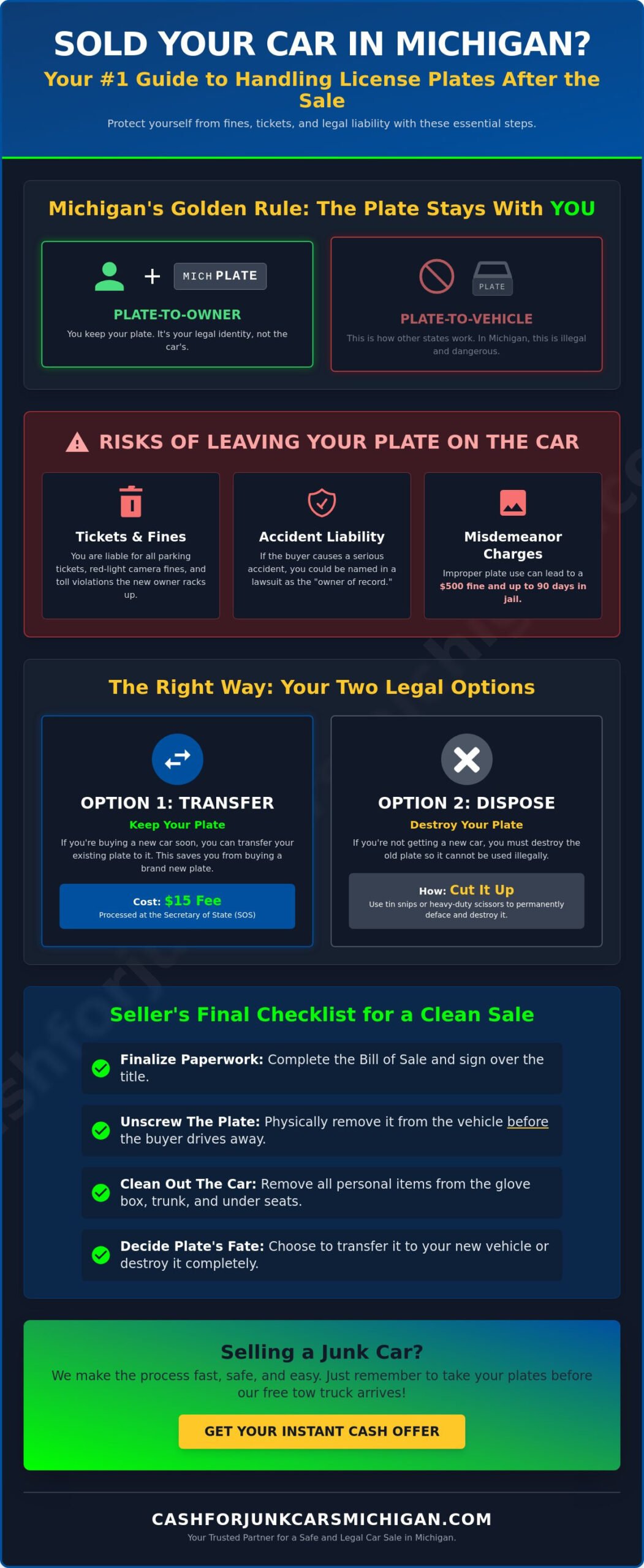
Transferring vs. Disposing of Your Michigan License Plates
The deal is done and the cash is in your hand. Now you have a critical decision to make regarding your registration. You have two main choices: move the plate to a new car or destroy it to cancel the registration. Michigan law allows you to transfer a valid plate to a newly purchased vehicle for a $15 fee. This is a fast, efficient way to stay legal without paying for a brand-new registration from scratch. Before you pull the screwdriver out and hand over the keys, check scrap car prices to ensure you’re getting every dollar your vehicle is worth.
If you aren’t replacing the car immediately, you must remove the plate and handle it according to state guidelines. Don’t let it sit in the trunk or leave it on the bumper “just for the drive home.” Knowing exactly what to do with license plates after selling car in Michigan prevents the state from thinking you still own a vehicle that’s already been scrapped or sold. Every day a plate remains active in your name is a day you’re liable for what happens to it.
How to Transfer a Plate to Your New Vehicle
Moving your plate is the smartest move if you’re upgrading your ride. In 2026, Michigan maintains a 15-day grace period that allows you to drive your new vehicle with the old plate while you wait for your appointment. You must carry the new title and the old registration in the car during this window. This transfer costs $15, which is a bargain compared to the $30 fee for new personalized plates or the $55 initial cost for legacy plates. The Michigan Secretary of State requires you to bring the original registration and the signed-over title to complete the process. Be aware that if you’re moving your plate to an electric vehicle, you’ll face the new $267 registration surcharge at the window.
Disposing of Old Plates Safely
Never throw a license plate directly into a kitchen trash can or a public bin. This is a massive identity theft risk. Scammers look for valid plates to put on stolen or unregistered vehicles, which links your name to their crimes. The safest way to get rid of a plate is to destroy it physically. Use tin snips to cut the plate in half or bend off a corner so it cannot be mounted to a bracket. You can also return old plates to any Secretary of State branch for recycling. This ensures the registration is officially dead in the state database. Since Michigan requires plates older than 10 years to be replaced anyway, it’s often better to destroy an old plate and start fresh with your next purchase.
Step-by-Step Guide: What to Do After the Sale is Final
The cash is in your hand and the deal is done. Now you must finish the job to ensure you aren’t held responsible for the car’s future. Start by completing a comprehensive Bill of Sale. This document must include the Vehicle Identification Number (VIN), the final sale price, the exact date, and signatures from both you and the buyer. Both parties need a signed copy. This paper is your primary shield if the buyer fails to register the car or leaves it abandoned on the side of a highway.
Immediately after the signatures are dry, grab a screwdriver. Physically unscrew the plates from the rear and front of the vehicle. Knowing exactly what to do with license plates after selling car in Michigan means understanding that the car cannot legally move on a public road until you have those plates in your possession. Never let a buyer drive away with your plates “just for the afternoon.” If they don’t have a trailer or their own registration, they need to make other arrangements. Your liability ends the moment those plates come off.
Finally, clear the vehicle of all personal identifiers. Peel off any window decals, parking permits, or residential registration stickers. These items can still be scanned by automated systems and linked back to your home address. If you have a toll transponder mounted to the windshield, rip it off now. You don’t want to pay for the buyer’s trip across the Ambassador Bridge or through out-of-state tolling zones. If you want a fast sale without the paperwork headache, get a quote now from our team for a guaranteed payout.
Filing the Record of Sale with the SOS
Don’t wait for the buyer to visit the Secretary of State. Use the Michigan SOS online portal to report the vehicle sale as soon as the car leaves your sight. This electronic filing is a critical step to end your liability as the owner of record. For your own protection, keep a digital copy of the buyer’s driver’s license on your phone. We also recommend taking a time-stamped photo of the car as it sits in your driveway without its plates. This visual evidence is undeniable if the police or a court asks for proof of delivery later.
Managing Your Insurance Policy
Call your insurance agent the same day you sell the car. You need to remove the vehicle from your policy to stop paying unnecessary premiums. However, you must wait until the plates are physically in your hand before you cancel the coverage. Michigan’s No-Fault insurance system is tied directly to your plate registration. Canceling your insurance while the plate is still “active” in the state database can trigger a registration suspension or lead to expensive SOS fees. Once the plates are safely in your house, your insurance company can finalize the removal without any legal gaps.
Selling a Junk Car? How Cash For Junk Cars Michigan Handles the Process
We buy junk cars, trucks, and SUVs in any condition, but we never take your license plates. Even if your vehicle is rusted through or hasn’t started in three years, that metal plate is still your legal identity. Many sellers get excited when the tow truck arrives and forget this critical step. We’ve built our entire service to ensure you’re protected from the moment you call us. For a full breakdown of the transaction from start to finish, check our guide on how to sell my junk car. Removing your plate is the single most important thing you can do for your legal protection.
We frequently handle vehicles with no titles or registrations. In these specific cases, knowing exactly what to do with license plates after selling car in Michigan becomes even more vital. Since there might not be a traditional title transfer at the Secretary of State, your physical possession of the plate is your primary proof that you’ve relinquished the vehicle. Our team makes this easy. We don’t just haul your car away; we walk you through the steps to stay compliant with state law.
Same-Day Pickup and Plate Removal
Our drivers are trained to assist you before the car is ever loaded. Our free junk car removal service includes a built-in wait time so you can remove your personal belongings and unscrew your plates. If the bolts are rusted or stuck, our drivers have the tools to help you get them off. Selling to a professional buyer like us is significantly safer than dealing with a random stranger from a classified ad. We are a legitimate business committed to Michigan SOS compliance and proper vehicle recycling. We ensure every car we buy is processed through licensed facilities, so you never have to worry about your old car being used illegally.
Getting Your Cash on the Spot
The transition from a “problem car” to “cash in hand” happens fast. Most of our pickups are completed in under 24 hours. We don’t believe in hidden fees or surprise deductions when we arrive. The quote you receive over the phone is the exact amount of cash our driver puts in your hand. This price remains the same regardless of your plate status or the condition of the vehicle. We prioritize your time and your legal safety. Don’t let a junk vehicle sit on your property and risk fines for expired registrations or abandoned property. Get a quote for your Michigan junk car today!
Secure Your Sale and Get Paid Today
Don’t let your old vehicle become a legal nightmare. Michigan is a plate-to-owner state. That metal plate is your identity until you physically remove it from the bumper. Leaving it on the car exposes you to a $500 fine and liability for the buyer’s future tickets or accidents. Whether you pay the $15 fee to transfer it to a new ride or destroy it to cancel the registration, taking action immediately is the only way to protect your record. Knowing exactly what to do with license plates after selling car in Michigan is the final step in a successful transaction.
We make the rest of the process effortless. Our team provides free towing anywhere in Michigan and pays cash on the spot. We even buy vehicles with no title or registration, so you don’t have to worry about missing paperwork. Our drivers will wait for you to remove your plates before we hook up the truck. Sell your junk car for cash today and keep your plates! You’ve done the hard work to stay legal. Now it’s time to get your payout and move on.
Frequently Asked Questions
Do I have to return my license plates to the SOS in Michigan?
You aren’t required to return your plates to the Secretary of State, but it’s a safe option for disposal. The SOS recommends destroying the plate by cutting it in half or bending the corners if you aren’t transferring it to a new vehicle. This prevents anyone from using your old registration illegally. You can also drop it off at any branch for recycling. This ensures your record stays clean after you finish deciding what to do with license plates after selling car in Michigan.
Can the buyer drive the car home without plates in Michigan?
No, a buyer cannot legally drive the car home using your plates or no plates at all. They must obtain a 15 day temporary registration or transfer a plate they already own to the new vehicle. If they drive away with your plate, you’re liable for every mile they travel. Make them arrange a trailer or visit the SOS office before they take possession. Your legal protection depends on that plate staying in your hands.
What happens if I lost my license plates before selling the car?
You must report lost or stolen plates to the police and the SOS immediately. If the plates are missing when you sell the car, you still need to notify the state that the vehicle’s no longer yours. Provide the police report number to the SOS to ensure you aren’t held responsible for those missing plates. This step is critical for anyone wondering what to do with license plates after selling car in Michigan when the metal’s gone.
Is there a fee to cancel my vehicle registration in Michigan?
There’s no fee to cancel your registration in Michigan, but you won’t get any money back either. You simply remove the plate and notify the state of the sale through their online portal. If you choose to transfer the plate to a new vehicle later, you’ll pay the standard $15 transfer fee. Cancellation is a free process that protects you from future liability and stops the clock on your insurance requirements.
Can I keep my personalized plates for a future car?
Yes, you can keep your personalized plates and move them to your next vehicle. Personalized plates in Michigan cost $30 in addition to standard registration fees. Since the plate belongs to you and not the car, you simply hold onto it until you’re ready to pay the $15 transfer fee at the SOS. This allows you to maintain your unique tag without starting over or losing your custom sequence.
Does Michigan give a refund for unused registration time when I sell my car?
Michigan does not provide refunds for unused registration time when a vehicle’s sold. Even if you just paid your renewal fees last month, that money stays with the state. This is why many sellers choose to transfer their plate to a new car instead of destroying it. You can apply the remaining time on your current registration to your new vehicle for a small $15 fee, saving you from paying twice.
What should I do if I accidentally left my plates on the car I sold?
You must contact the buyer immediately to retrieve your plates if you accidentally left them on the vehicle. If the buyer’s uncooperative, report the plates as lost or stolen to your local police department. This creates a legal paper trail that proves you’re no longer in possession of the registration. This report is your only defense against tickets or crimes committed by the new owner after the car leaves your sight.
How do I prove I sold my car if the buyer never titles it?
A signed Bill of Sale and a filed “Record of Sale” with the SOS are your best forms of proof. Michigan law allows you to report a sale online to the Secretary of State to end your liability. If the buyer never titles the car, the state will still have your report on file showing the exact date and time the vehicle left your possession. Keep your copy of the Bill of Sale in a safe place forever.