

What if your rusted, non-running eyesore is actually a high-value industrial resource waiting to be harvested? Most owners feel a sense of relief when the tow truck arrives, but that relief often comes with lingering questions. You might worry about your legal liability after the title transfer or feel skeptical about the actual value of your scrap metal. It’s common to wonder exactly what happens to my car after I junk it once the transaction is complete. You want the cash, but you also want the peace of mind that comes with responsible disposal.
The truth is that your vehicle enters a sophisticated, high-speed recycling ecosystem. With scrap prices for copper and brass seeing notable increases in July 2026, your car’s components are more vital to the economy than ever. This article breaks down the step-by-step lifecycle of a junk vehicle. You’ll discover how fluids are safely drained to protect the environment, how usable parts are salvaged, and how the remaining steel is crushed for manufacturing. We’ll show you how a problematic asset becomes a clean, profitable contribution to the industrial supply chain.
Key Takeaways
- Learn how professionals verify your VIN and weigh your vehicle to ensure you get a fair price based on current scrap market rates.
- Understand exactly what happens to my car after I junk it as technicians salvage high-value components like engines and transmissions before the frame is industrially shredded.
- Gain peace of mind by discovering the exact process for retiring your VIN and canceling your title with the state to remove all future liability.
- Find out why choosing a professional junk car buyer guarantees immediate cash and free removal, protecting your profit from hidden towing fees.
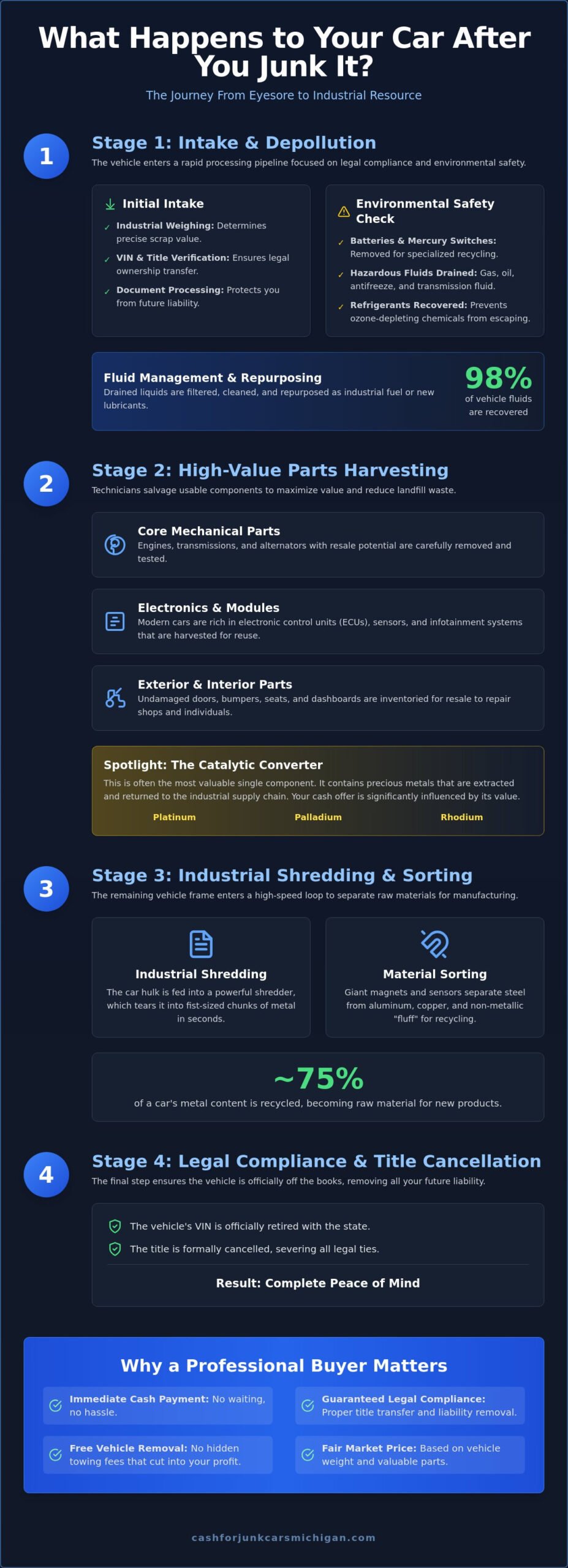
Stage 1: Immediate Intake and Depollution
The moment your vehicle reaches the facility, the process moves fast. Efficiency is the top priority. Your car is immediately placed on a massive industrial scale. This scale provides a precise weight measurement to determine the baseline scrap value. Specialists record the VIN and verify your ownership documents on the spot. This ensures the transaction is legal and protects you from future liability. If you’ve wondered what happens to my car after I junk it, this intake is the first step in turning a liability into a resource.
Key intake steps include:
- Industrial weighing for scrap value accuracy.
- VIN recording and title verification.
- Immediate document processing for legal compliance.
Once the paperwork is verified, the car moves to a dedicated depollution station. This is a vital part of the vehicle recycling process. Technicians puncture or remove the gas tank. This step eliminates combustion risks before the car enters the heavy machinery phase. They work quickly to drain hazardous fluids to prevent soil or groundwater contamination. This phase is about speed and environmental safety.
The Environmental Safety Check
Safety protocols are strict and mandatory. Technicians pull lead-acid batteries first. These batteries go through specialized chemical recycling to keep toxic materials out of the ground. Next, they extract mercury switches from the lighting systems of older vehicles. This prevents mercury from vaporizing or leaking during later processing stages. Specialists also use vacuum systems to recover refrigerants like Freon. This prevents ozone-depleting chemicals from escaping into the atmosphere. Every hazardous component is accounted for before the car moves forward.
Fluid Management and Repurposing
Liquids aren’t just drained; they’re repurposed. Motor oil and transmission fluids are filtered and cleaned. These fluids often find a second life as industrial heating fuel or are refined back into new lubricants. Antifreeze is neutralized or recycled into new coolant products for safe disposal. Industry standards are high for these processes. Over 98% of vehicle fluids are recovered or recycled today. This turns potential environmental hazards into useful industrial materials without any wasted time or effort.
Stage 2: High-Value Parts Harvesting and Salvage
After the fluids are gone, the vehicle moves to the salvage floor. It isn’t just a pile of metal yet. It’s a collection of working components. Technicians work fast to identify “core” parts. These are items that can be refurbished or sold as-is to repair shops or individual buyers. If you’ve wondered what happens to my car after I junk it, this is the phase where the most value is extracted. Professional buyers look for parts that still have life to maximize the return on every vehicle.
Engines and transmissions are the primary targets. If they have resale potential, they’re pulled and tested immediately. It isn’t just the big mechanical blocks, either. Modern cars are packed with electronic modules and sensors. Specialists harvest these for tech recyclers who need the specific circuitry inside. Even tires are sorted. Good tires go to the used market. Damaged ones are separated for rubber mulching. According to vehicle recycling statistics, while about 75% of a car’s metal is eventually recycled, the remaining “auto shredder fluff” often ends up in landfills. Harvesting parts first reduces this waste significantly.
The Catalytic Converter and Precious Metals
The catalytic converter is the most valuable small part on your junk car. It contains rare precious metals like platinum, palladium, and rhodium. These metals are essential for industrial reuse and are very expensive to mine. This single component is a major factor in the cash offer you receive. Professionals know how to grade these converters accurately. They ensure these metals are extracted and sent back into the manufacturing supply chain. This is a key reason why what happens to my car after I junk it matters for the economy and the environment.
Exterior and Interior Salvage
Body panels, doors, and glass are inspected for damage. If they’re in good shape, they’re inventoried for resale. Interior components like seats, dashboards, and trim are also removed. These often end up in “U-Pull-It” inventory for budget-conscious drivers. If you’ve thought about selling car for parts on your own, you know the labor is intense. It’s much simpler to let a professional yard handle the harvesting. You get paid immediately, and the yard handles the teardown. If you want to skip the hassle, you can get a cash offer for your car right now and let the experts do the heavy lifting.
Stage 3: The Industrial Shredding and Sorting Loop
Once the high-value parts are gone, the car is officially a “hulk.” It is no longer a vehicle. It is a dense block of mixed raw materials. To make transport efficient, the yard uses a hydraulic flattener. This machine crushes the remaining frame into a thin sandwich. This saves massive amounts of space on the transport trucks. If you ever wondered what happens to my car after I junk it, this is the point where its recognizable shape disappears forever. Efficiency drives every move in this stage.
The flattened hulks travel to a massive industrial shredder. These machines are the size of small buildings. They use heavy rotating hammers to tear the steel apart in seconds. The shredder reduces the entire car into fist-sized chunks of mixed metal, plastic, and glass. This raw mixture then moves along a series of conveyor belts for high-speed sorting. There is no room for manual labor here. The process relies on physics and advanced sensors to separate the wealth from the waste.
Magnetic separators are the first line of defense. They hang over the belts and pull ferrous metals out of the stream. Ferrous metals contain iron and are magnetic, while non-ferrous metals like aluminum and copper do not contain iron and are non-magnetic. After the magnets do their work, eddy current separators take over. These use powerful electromagnetic fields to “kick” non-ferrous metals like aluminum into separate bins. This automated sorting ensures that every ounce of valuable material is recovered for the next phase of its life.
Separating the Scrap
Not everything in the shredder is metal. The process creates a byproduct known as “auto shredder residue” or car fluff. This mixture includes bits of glass, plastic, foam, and fabric. Advanced systems use air suction and flotation tanks to pull these materials away from the metal. While some fluff is landfilled, new technologies are constantly finding ways to recycle the plastics and glass. This keeps the process as clean as possible while maximizing the yield of the metal stream.
From Shredder to Steel Mill
The sorted steel chunks are the final prize. These go directly to steel mills. Using recycled steel saves about 75% of the energy required to create steel from virgin iron ore. This recycled metal is melted down and rolled into new sheets. These sheets often become parts for the next generation of cars. The current scrap car prices reflect the high demand for this recycled material. Your old car doesn’t just sit in a field. It becomes the backbone of new manufacturing projects across the country.
Stage 4: Legal Compliance and Title Cancellation
The physical destruction of the vehicle is only half of the process. The administrative closure is what actually protects you. Once the car is shredded, the yard notifies the Michigan Secretary of State. They officially record the vehicle as “junked.” This status is final and permanent. If you have wondered what happens to my car after I junk it from a legal standpoint, this is the moment your responsibility ends. The VIN is retired in the National Motor Vehicle Title Information System (NMVTIS). This federal database ensures that the vehicle can never be legally registered, titled, or driven on any road in the country again.
This stage removes your name from the vehicle’s history. It prevents any future tickets, accidents, or abandoned vehicle fees from coming back to you. Administrative errors can lead to legal headaches. Professional yards prioritize this step to ensure a clean break between the previous owner and the scrap metal. You get the cash, and the state gets the notification. It is a fast, efficient way to end your liability.
Michigan-Specific Paperwork Requirements
Michigan has specific rules for handling junk vehicles. You must provide a valid title to the buyer to complete the sale legally. If you have lost your paperwork, you need to know how to sell my junk car using the correct state-approved methods. Always demand a receipt or a bill of sale the moment the tow truck arrives. This document is your proof of transfer. It shows exactly when the vehicle left your possession and who took it. Without this receipt, you have no evidence that the car was sold if the paperwork isn’t filed correctly by the yard.
Liability Protection for the Seller
Protect yourself before the tow truck leaves your driveway. Remove your license plates immediately. Do not leave them on the car. These plates are tied to your identity and insurance. Once the plates are off and the bill of sale is in your hand, call your insurance provider. You can end your coverage immediately by confirming the “Scrap” or “Junk” status with the state. Reputable buyers like Cash For Junk Cars Michigan handle the heavy lifting of state notifications automatically. This ensures your title is cancelled without any extra effort on your part. If you want to clear your driveway and your legal record today, get a quote for your junk car now and let the professionals handle the compliance.
Why Choosing a Professional Junk Car Buyer Matters
Choosing the right buyer is the final and most important step in the vehicle lifecycle. It determines your profit and your legal safety. Now that you know what happens to my car after I junk it, you understand that the process requires industrial expertise. Professional buyers provide free towing as a standard service. This prevents high logistics costs from eating your profit. You keep the full amount promised. Amateur collectors often try to deduct towing fees at the last minute. We don’t do that. The price we quote is the cash you receive.
Immediate cash payments are a core part of a professional transaction. You shouldn’t wait for a check that might bounce or a digital transfer that takes days to clear. We provide immediate liquidity on the spot. Beyond the money, licensed recyclers follow strict EPA guidelines for hazardous waste disposal. They handle everything from lead-acid batteries to mercury switches with care. This protects Michigan’s groundwater and soil. We are local experts who understand the regional scrap market and SOS requirements. We ensure your paperwork is filed correctly to end your liability forever.
The Convenience of Same-Day Pickup
Detroit and the surrounding Michigan areas move fast. You need a service that matches that speed. Same-day pickup eliminates the eyesore of a non-running vehicle on your property immediately. You get your driveway or garage back today. There’s no need to wait for weeks while a private buyer flakes on you. This is the most efficient way to get cash for junk cars without any stress. We value your time and get straight to the point.
Get Your Instant Offer Today
The process is designed for maximum speed. You call for a quote. You schedule a free pickup. We handle the rest. We buy vehicles in “as-is” condition. You don’t have to fix a single thing. Don’t worry about flat tires, broken glass, or a dead engine. You don’t even need to clean the interior. We accept vehicles regardless of their physical condition or missing paperwork. It is a straightforward exchange of a problematic asset for immediate cash. Call Cash For Junk Cars Michigan now for your quote and clear your property today. Our team is ready to provide the fast, reliable service you need.
Clear Your Driveway and Get Paid Today
Your unwanted vehicle is a valuable industrial resource. From the initial depollution to the final shredding at the steel mill, every step of the lifecycle serves a specific purpose. Professional recycling protects the Michigan environment and your legal record. Title cancellation ensures you never face a surprise ticket or future liability fee. Understanding what happens to my car after I junk it gives you the peace of mind to finally move forward. You don’t have to worry about the logistics or the paperwork when you work with experts who value your time.
Stop letting that non-running eyesore take up space on your property. We make the entire process fast and simple. We provide free towing with every pickup and offer same-day service throughout Michigan. You get cash paid on the spot regardless of the vehicle’s condition. Get an instant cash offer for your Michigan junk car today! You can turn your problematic asset into immediate liquidity in just a few hours. Take the first step and contact us now to get the money you deserve. It is time to get that car out of your way for good.
Frequently Asked Questions
Is my car’s title destroyed after I junk it?
Yes, your car’s title is legally cancelled and permanently retired in the state system. The yard notifies the Michigan Secretary of State to mark the vehicle as “junked” or “destroyed.” This status ensures the VIN can never be used to register a vehicle again. It’s a critical step to end your liability. If you’ve wondered what happens to my car after I junk it, this administrative closure is the final legal protection for the seller.
Can I get my car back after it has been sold to a junkyard?
You generally cannot get your car back once the sale is finalized and the tow truck leaves. The process moves fast. Vehicles are often processed for depollution and parts harvesting within hours of arrival. Once the car enters the industrial shredding queue, its physical form is destroyed. Always double check the vehicle for personal items before you hand over the keys. The transaction is final and transactional.
What happens to my personal information and registration in the car?
You are responsible for removing all personal information and registration documents from the vehicle. Junkyards don’t guarantee the security of any papers left inside. Clear out the glove box, center console, and sun visors before the pickup. Shred any old insurance cards or registration forms yourself. This prevents identity theft and ensures your private data doesn’t end up in a salvage yard or a recycling bin. Efficiency starts with a clean car.
Does the junkyard report the sale to the Michigan Secretary of State?
Yes, reputable junk car buyers report the transaction to the Michigan Secretary of State immediately. This is a mandatory part of the legal compliance stage. They submit the necessary paperwork to ensure the title is cancelled in your name. This protects you from future tickets or abandoned vehicle fees. Always ask for a bill of sale or a receipt from the driver to prove the transfer of ownership occurred correctly.
Are junk cars actually recycled or just left in a field?
Junk cars are actively recycled because the materials inside have high market value. They aren’t just left to rot in a field. Steel, copper, and aluminum are harvested and sold back to manufacturers. This is a high-speed industrial process. If you want to know what happens to my car after I junk it, it’s a journey from a driveway eyesore to raw manufacturing material. Professional yards prioritize efficiency and immediate material recovery.
How much of a car is actually recyclable?
Approximately 75% to 80% of a vehicle’s weight is fully recyclable. Most of this weight comes from the steel frame and engine components. Other materials like aluminum wheels, copper wiring, and lead-acid batteries are also recovered. While some “auto shredder fluff” like foam and fabric may end up in landfills, the vast majority of the car’s metal is melted down. This creates a sustainable cycle for new automotive manufacturing and industrial parts.
What happens if I junk a car that still has a lien on it?
You cannot legally junk a car with an active lien. The lienholder technically owns the vehicle until the debt is paid. You must satisfy the loan and receive a lien release or a clear title before a professional buyer can accept the car. Attempting to junk a car with a lien can lead to legal and financial trouble. Pay off the balance first to ensure a smooth, hassle-free transaction that follows all state regulations.
Do I need to remove the tires before junking my car?
You don’t need to remove the tires before junking your car. Professional buyers accept vehicles in “as-is” condition, including the wheels and tires. Technicians at the yard will handle the removal and sorting. They determine if the tires can be sold as used inventory or if they should be sent for rubber mulching. Leave the car exactly as it is to ensure a fast and simple pickup process. We handle all the heavy lifting.