

You don’t need a perfect title or a working engine to walk away with a stack of cash today. Scrapping an old vehicle in Michigan often feels like a legal minefield. You’re likely worried about getting lowballed by a shady junk dealer or accidentally violating complex Secretary of State regulations. It’s stressful to think you might leave your personal data or a spare house key inside a car that’s headed for the crusher. Learning exactly how to prepare a car for scrapping is the only way to protect your wallet and your legal standing.
We know you want this asset converted into liquidity as fast as possible. This guide provides a straightforward checklist to maximize your payout and ensure a hassle-free removal. We’ll break down the 2026 Michigan paperwork rules, including the 10-Year Rule for selling without a title. You’ll learn how to clear your personal items and handle the final hand-off so you can get paid the same day with zero stress. Follow these steps to turn that unwanted car into immediate cash without the headache.
Key Takeaways
- Clear out all storage compartments and remove toll transponders to protect your privacy before the tow truck arrives.
- Secure your Michigan Certificate of Title and remove your license plates to finalize the legal transfer of ownership.
- Keep the vehicle components intact to qualify for the highest “complete car” payout from reputable buyers.
- Master how to prepare a car for scrapping with our checklist to ensure a fast, transparent transaction without hidden fees.
- Arrange for free junk car removal to skip the hassle of towing and get cash in hand the same day your vehicle is collected.
Essential First Steps: Clearing Out Personal Belongings
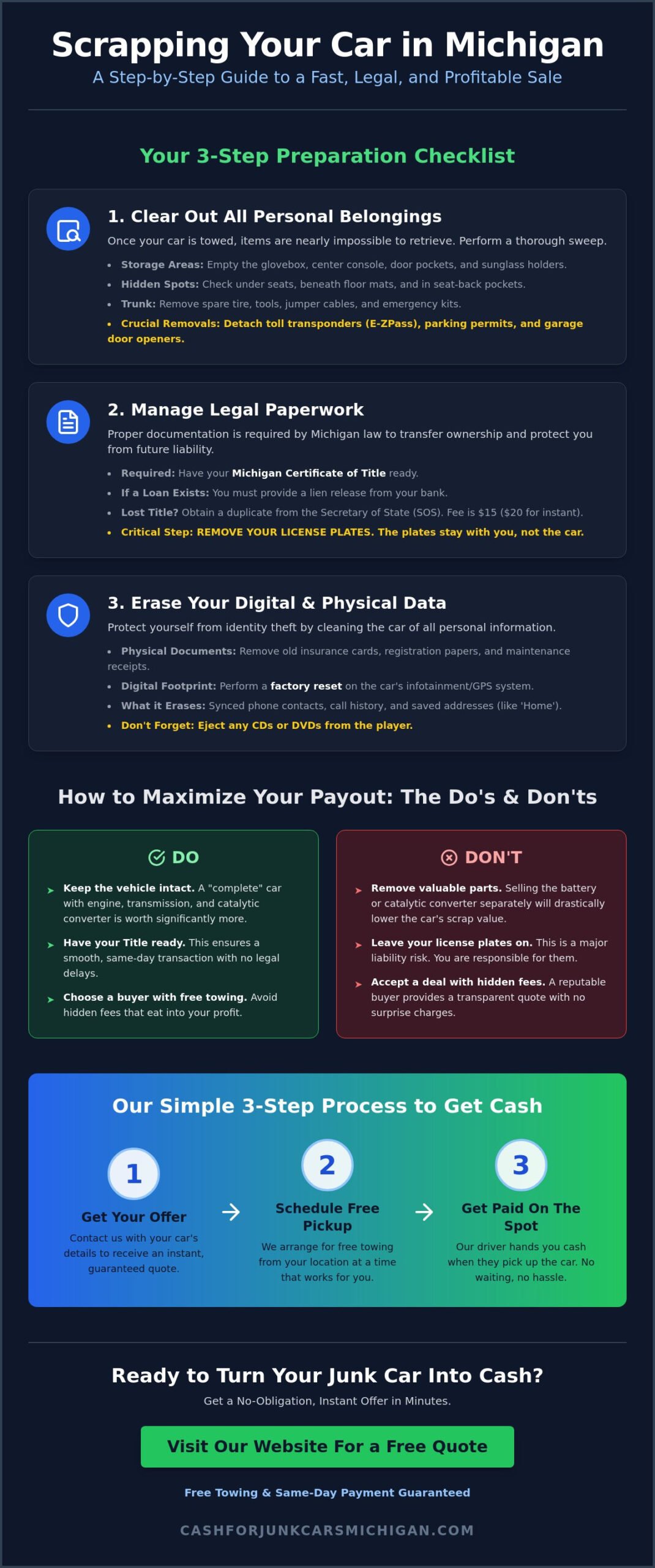
Before the tow truck arrives for your junk car removal, you must strip the vehicle of everything you own. This is a critical part of knowing how to prepare a car for scrapping. Once the car is hauled away to begin the vehicle recycling process, retrieving lost items becomes nearly impossible. Start with a systematic sweep of all storage compartments. Empty the glovebox, the center console, and any door pockets. Don’t forget to check the overhead sunglass holders and the sun visors for hidden cash or cards. You want the car to be an empty shell of metal and glass before the driver pulls into your driveway.
Your windshield often holds items people forget. Peel off all electronic toll transponders like E-ZPass or I-Pass. These are linked to your bank account and will continue to charge you if they stay with the car. Remove any parking permits, gate passes, or handicap placards. These items are difficult and expensive to replace. Check the trunk and the spare tire well. Many owners leave behind expensive jumper cables, emergency kits, or personal tools that can be reused or sold separately. If you have a garage door opener clipped to the visor, grab it now. These small oversights can cost you money later.
Removing Sensitive Documents and Data
Privacy is your biggest priority during this transaction. Search the glovebox for old insurance cards, registration papers, or maintenance receipts. These documents contain your full name, home address, and VIN. You don’t want this information sitting in a junkyard or accessible to strangers. Modern cars also store digital footprints. Go into the infotainment settings and perform a factory reset. This clears your synced phone contacts, call history, and home address from the GPS system. It’s a fast step that prevents identity theft and ensures a clean break from the asset.
The ‘Hidden’ Valuables Checklist
Small items often slip into hard-to-reach cracks and stay there for years. Use a flashlight to look under the seats and beneath the floor mats. You might find loose change, jewelry, or even small electronics. Check these specific spots before the car is gone:
- Seat-back pockets: Look for tablets, books, or charging cables.
- CD players: Eject any discs left in the drive.
- Under the mats: Check for forgotten documents or spare keys.
- Rear cargo areas: Ensure no personal equipment is tucked into side panels.
Complete this sweep quickly and efficiently. Your goal is a clean legal break from the vehicle. Once the interior is empty, you’re ready to handle the Michigan title requirements and secure your cash payment. Don’t let your personal data or valuables go to the crusher.
Managing the Paperwork: Michigan Title and Registration Requirements
Legal compliance is the most important part of learning how to prepare a car for scrapping in the Great Lakes State. You cannot simply hand over the keys and walk away. Michigan law requires a clear transfer of ownership to protect you from future liability. Locate your Michigan Certificate of Title immediately. This document is the only way to prove you have the legal right to sell the vehicle. If you have a lien on the car, you must provide a lien release from the bank before the transaction can proceed. This ensures the buyer can legally process the metal and you can collect your cash without delays.
The Michigan Vehicle Code outlines specific regulations for salvage and scrap titles. For late-model vehicles, defined as those manufactured within the last six model years for cars under 8,000 pounds, the paperwork is more rigorous. If you’ve misplaced your title, you can obtain a duplicate from the Secretary of State (SOS) for a $15 fee. If you need it immediately, some branches offer “instant title” services for $20 total. Having this paperwork ready ensures you get paid the same day. Understanding how to prepare a car for scrapping includes knowing these administrative costs so there are no surprises during the sale.
Michigan License Plate Removal
Remove your license plates before the tow truck arrives. In Michigan, the plate stays with the owner, not the vehicle. Leaving your plates on a junk car is a major liability risk. If the vehicle is involved in an incident or a parking violation after it leaves your property, the plate links you directly to the scene. Use a screwdriver to unscrew both the front and rear plates. You can then transfer these plates to a new vehicle at the SOS or destroy them if they are no longer needed. Never let a buyer drive away with your plates attached.
Scrapping a Car Without a Title in Michigan
Michigan allows a “10-Year Rule” for titleless vehicles. If your car is at least 10 years old and has a scrap value under $2,500, you can sell it to a licensed processor without the original title. You will need to provide a valid driver’s license or state ID to complete the transaction. The buyer is then required to file Form TR-11 (Certification of Right to Junk) to document the sale legally. Cash For Junk Cars Michigan works with licensed processors who understand these rules. This makes the process fast and compliant even when paperwork is missing.
Canceling Insurance and Registration
Call your insurance provider the moment the car is hauled away. There is no reason to pay for coverage on a vehicle that no longer exists. Provide them with the date of sale and a copy of the bill of sale for your records. You should also notify the SOS to ensure your registration record is updated. This prevents any confusion regarding future taxes or fees. Keep a signed copy of the title or a basic bill of sale as proof of transfer. If you want a fast estimate for your vehicle, you can get a cash quote online right now to start the process.
Mechanical Preparation: Should You Remove Parts or Fluids?
Efficiency is the key to a fast payout. Many owners waste hours attempting to drain fluids or dismantle components. This is unnecessary labor. When you are learning how to prepare a car for scrapping, focus on the vehicle’s condition as a whole. Professional buyers prefer the car to be as intact as possible. Do not worry about draining the engine oil, coolant, or brake fluids. Licensed processors have specialized equipment to handle these liquids safely according to environmental regulations. However, you should check the fuel level. Most buyers prefer the gas tank to be as empty as possible to minimize fire risks during transport and crushing.
Keep the tires on the vehicle. Even if they are bald or flat, they are essential for a safe and fast towing process. A car with four wheels can be rolled onto a flatbed in minutes. A car on blocks requires specialized equipment and significantly more time. This extra effort can sometimes lead to a lower offer because of the increased labor costs for the buyer. Compliance with Michigan scrap vehicle laws ensures that the removal process remains legal and streamlined. Keep the car mobile to ensure you get your cash without any logistical delays.
The Myth of Stripping Parts for Profit
You might think selling individual components will net more money. This is rarely true for the average seller. Before you pick up a wrench, evaluate if selling your car for parts is worth the time and effort. Removing the catalytic converter, battery, or alternator will slash your cash offer immediately. Scrapyards pay a premium for “complete” cars because they contain the full weight of precious metals. A stripped “shell” has very little value and may even result in a towing fee rather than a payout. An intact vehicle is more valuable for recycling because it contains all the original high-value materials required for processing.
Preparing for the Tow Truck
Speed up the transaction by making the car accessible. Move the vehicle to a flat, open area like a driveway or the street. Clear away any debris, trash, or obstacles that might block the tow truck’s path. If your cleanup project involves more than just the vehicle, Book Your Dumpster USA provides roll-off dumpster rentals to help manage any additional waste. If the car is in a backyard or a tight garage, move it now. Ensure the steering wheel is unlocked and the tires have enough air to roll. If the car is stuck in park or the wheels are seized, tell the buyer upfront. Being honest about the vehicle’s mechanical state ensures the driver brings the right equipment for a same-day pickup. This preparation ensures a clean, fast break from your unwanted asset, allowing you to move on to other property improvements like energy-efficient insulation from Third Coast Spray Foam.
Evaluating Your Options: Scrapyards vs. Professional Junk Car Buyers
Choosing the right buyer is just as important as knowing how to prepare a car for scrapping. You have two main paths in Michigan: driving the vehicle to a local scrapyard or calling a professional junk car buyer. Traditional scrapyards often require you to handle the logistics yourself. If your car isn’t roadworthy, you must pay for a private tow truck. This expense eats directly into your profit. Professional buyers eliminate this hurdle by coming to your location. They provide a mobile service that prioritizes your time and immediate liquidity.
Market rates fluctuate based on the global demand for steel and individual component values. You should analyze how scrap car prices are calculated to ensure you receive a fair deal. As of June 2026, Michigan prices remain competitive with national averages. A reputable buyer will provide a quote based on the current weight of the vehicle and the value of high-demand parts like catalytic converters or GPS systems. Look for companies that offer same-day service and pay cash on the spot. Speed and transparency are the hallmarks of a professional transaction.
Why Free Towing is a Non-Negotiable Benefit
Never pay to have your junk car removed. Hiring a private tow truck in Michigan can cost significant money depending on the distance to the yard. This fee can sometimes represent half the value of the car itself. Complimentary removal is a standard industry benefit that increases your total net profit. Cash For Junk Cars Michigan includes free towing with every purchase. This logistical support ensures you don’t spend a dime to get rid of your unwanted asset. It turns a problematic vehicle into pure profit without any out-of-pocket costs.
Avoiding ‘Scrapyard Scams’ and Last-Minute Haggling
Some buyers use predatory tactics to lower their offers. They might give you a high quote over the phone but try to haggle once they arrive at your house. This is a common red flag. Demand a firm quote based on the car’s year, make, and model before scheduling a pickup. Legitimate buyers never charge “disposal fees” or “administrative costs” to take your car. If a buyer tries to change the price at the last minute, cancel the deal immediately. Stick with a no-nonsense provider that honors their initial estimate. You can get a guaranteed cash offer right now and skip the stress of traditional scrapyard negotiations.
The Final Handover: Getting Your Cash and Free Towing in Michigan
The final handover is the fastest part of the entire transaction. Once you’ve mastered how to prepare a car for scrapping, the actual removal takes only a few minutes. Schedule a pickup time that fits your day. Many professional buyers offer same-day service across Michigan to help you clear space quickly. Have your driver’s license and ownership documents ready before the tow truck pulls up. This prevents unnecessary delays and ensures you get your money without waiting. Efficiency is the goal.
Verify the driver’s identity and confirm the final quote one last time. Sign the title over according to Michigan state requirements to end your legal liability immediately. Signing the title is a high-stakes step. In Michigan, you must sign the “Seller” section exactly as your name appears on the front of the document. If there are two owners, both must sign. Errors here can void the document and force a trip to the Secretary of State for a duplicate. This is why knowing how to prepare a car for scrapping involves double-checking your paperwork for accuracy before the driver arrives. Clear, legible signatures ensure a clean legal break.
Do not let the vehicle be loaded onto the flatbed until you have the cash in your hand. A legitimate business pays you on the spot. Don’t settle for “checks in the mail” or digital transfers that take days to clear. Demand cash. The exchange should be a direct trade: your car and title for their money. If the buyer hesitates or tries to change the terms, walk away. You have the leverage until the car is on the hook. Ask for a receipt or a written confirmation of the sale for your permanent records. This document is your proof that the vehicle is no longer your responsibility.
The 3-Step Pickup Process
Speed is the priority. Follow this simple path to liquidity:
- Step 1: Get your instant quote over the phone by providing the year, make, and model.
- Step 2: Schedule the free removal at your Michigan home or place of business.
- Step 3: Hand over the keys, sign the paperwork, and get paid on the spot.
This streamlined approach removes the friction from the transaction. It allows you to move on from the unwanted asset immediately. You get the cash, the buyer gets the metal, and the problem is solved.
Life After Scrapping: Final To-Dos
Your work isn’t quite finished when the truck leaves. Double-check that you have the license plates in your possession. As discussed, these stay with you. Make a final phone call to your insurance provider to confirm the cancellation. This stops any future billing cycles. For a deeper dive into the specific legalities of the transaction, read our how to scrap a car guide. These final steps protect your wallet and your legal standing.
Clear Your Driveway and Get Paid Today
You now have the definitive roadmap for how to prepare a car for scrapping in Michigan. By securing your Certificate of Title and removing your license plates, you’ve handled the essential legal requirements for a clean break. You also know that keeping the vehicle intact is the fastest way to maximize your final payout. Don’t lose money by stripping parts or paying for private towing services. The goal is a fast, efficient transaction that converts your unwanted asset into immediate liquidity.
It’s time to stop letting that junk car take up valuable space on your property. We provide a straightforward solution that puts money in your pocket right now. Our service includes free towing throughout Michigan and the convenience of same-day pickup. You get cash on the spot with zero hassle and no hidden administrative fees. We prioritize your time and ensure the entire process is handled professionally from start to finish.
Get an instant cash offer for your junk car today! and experience the most reliable removal service in the state. You’re just one phone call away from a clear driveway and a stack of cash. Take action now and let us handle the heavy lifting for you.
Frequently Asked Questions
Can I scrap a car in Michigan if I don’t have the title?
Yes, you can scrap a vehicle without a title if it is at least 10 years old and has a scrap value under $2,500. This is known as the 10-Year Rule in Michigan. You must provide a valid driver’s license or state ID to the licensed scrap processor. They will then file Form TR-11 to legally document the transaction with the state. This is a key part of how to prepare a car for scrapping when paperwork is missing.
Do I need to drain the gas and oil before the car is picked up?
No, you do not need to drain any fluids yourself. Professional junk car buyers and licensed processors have specialized equipment to safely remove and recycle oil, coolant, and brake fluid. We recommend keeping the fuel level as low as possible for safety during transport. Attempting to drain these liquids at home is messy, time consuming, and often unnecessary for a professional sale.
Should I remove the license plates before the tow truck arrives?
Yes, you must remove your license plates immediately. In Michigan, the plate is registered to the owner and does not stay with the vehicle. Leaving your plates on the car creates a massive liability risk if the vehicle is involved in any future incidents. Unscrew both plates and decide whether to transfer them to a new vehicle at the Secretary of State or destroy them completely.
How much of a cash payout should I expect for a junk car in Michigan?
Your cash payout depends on the vehicle’s weight, completeness, and the current market price for scrap metal. As of June 2026, Michigan scrap prices remain competitive with national averages. A complete vehicle with its original catalytic converter and engine will always command a higher price than a stripped shell. Get an instant quote over the phone to see exactly what your specific year, make, and model is worth today.
Is it better to sell my car for parts or scrap it as a whole?
Scrapping the car as a whole is usually the best option for speed and total profit. Stripping individual parts requires specialized tools, mechanical knowledge, and hours of labor. Most professional buyers will significantly lower their offer if major components like the battery or alternator are missing. Keeping the car intact ensures you qualify for a “complete car” quote and receive your cash the same day.
What happens if my car is missing keys or tires?
We still purchase vehicles even if they are missing keys or have flat tires. Missing keys are a common administrative barrier that we easily overcome. If the car is missing tires or the wheels are seized, please inform us when you call for a quote. This allows the driver to bring the correct towing equipment to handle the removal safely. We focus on being a hassle-free solution regardless of the vehicle’s physical condition.
Do I have to pay for the towing service when I scrap my car?
No, you should never pay for towing when selling a junk car. Complimentary removal is a central part of our value proposition. We provide free junk car removal throughout Michigan to ensure you keep 100% of your cash payout. This logistical support removes the stress of moving a non-running vehicle and ensures a fast, profitable transaction for every customer.