

Your non-running vehicle is a liability that’s currently costing you money in city fines and wasted space. Michigan local ordinances are stricter than ever in 2026. An unregistered car on your property is an easy target for daily penalties. You probably think you need to fix the engine or pay for a tow just to get rid of it. That’s a mistake. Learning how to sell a non-running car is about logistics, not mechanics. Your broken vehicle is worth immediate liquidity right now.
We know the stress of trying to find a reliable buyer who won’t waste your time. You want the car gone. You want the cash in your hand. You definitely don’t want to pay for a tow truck. This 2026 guide shows you how to turn that metal into money fast. We’ll cover Michigan title laws, including the $15 transfer fee and how to sell for scrap using Form TR-11. You’ll learn how to get professional cash for junk cars and secure free junk car removal today.
Key Takeaways
- Use the 50% rule to decide if expensive repairs are a waste of your money.
- Learn how to sell a non-running car to avoid towing fees and unreliable private buyers.
- Discover why local Michigan specialists pay more than trade-in programs for mechanical failures.
- Organize your paperwork and clear your title to guarantee a fast, legal sale.
- Get immediate cash for junk cars and trucks with complimentary removal included.
Understanding Your Options for a Car That Won’t Start
A non-running car in the 2026 market is more than just a vehicle with a dead battery. It includes cars with blown head gaskets, seized transmissions, or complex electrical failures that cost more to fix than the vehicle’s total value. These cars are liabilities. They take up space and risk local code violations. You must decide how to sell a non-running car before the costs of ownership outweigh the scrap value. Most traditional dealerships will reject these vehicles as trade-ins. They focus on retail-ready inventory. A broken car requires them to pay for towing and expensive shop labor; this kills their profit margin immediately.
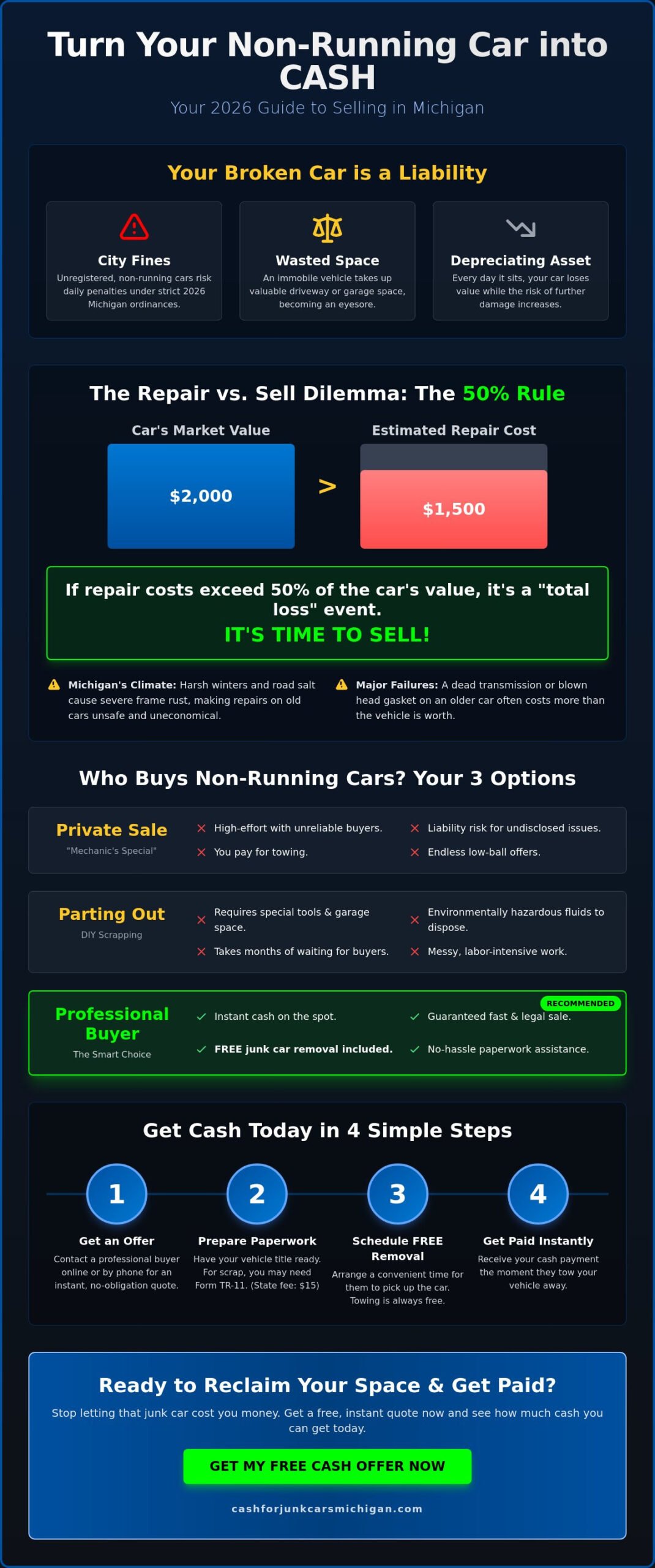
You have three primary paths to consider. A private sale offers the potential for a higher price but takes the most time. Parting out the vehicle requires technical skill and months of patience. Professional junk buyers provide the fastest route to cash. They handle the logistics and pay you on the spot. Your choice depends on whether you value your time or a slightly higher payout that might never actually materialize. Speed is usually the priority when dealing with a depreciating asset that doesn’t drive.
The Reality of Private Sales for Broken Cars
Listing a “mechanic special” on Facebook Marketplace is often a lesson in frustration. You’ll face a barrage of low-ball offers and messages from people who never show up. Beyond the annoyance, private sales carry liability risks. Selling a damaged vehicle to an individual can lead to disputes if the buyer feels you hid specific mechanical issues. Most private buyers also expect you to have the car tow-ready at your own expense. Paying for a tow truck to deliver a car you just sold significantly reduces your take-home cash. It’s a high-effort path with very low reliability.
The Hidden Costs of Parting Out Your Vehicle
Parting out a car sounds profitable on paper, but the reality is messy. You need specialized tools, an engine hoist, and a large garage to store parts while you wait for buyers. This is a manual version of the vehicle recycling process that most people aren’t equipped to handle. Selling major components like engines or transmissions can take months of waiting. You also have to deal with Michigan’s environmental laws. You cannot simply pour old oil or coolant down the drain. Proper disposal of hazardous fluids is a requirement that adds more work to an already difficult task. If you want a fast transaction, don’t try to part it out yourself.
The Repair vs. Sell Dilemma: Is It Worth the Investment?
Stop. You are likely losing money by holding onto that broken vehicle. If your repair estimate exceeds 50% of the car’s current market value, the math is clear. You should sell it. For older vehicles in Michigan, a single major failure like a blown head gasket or a seized engine often costs more than the car is worth. These are “total loss” events. Traditional trade-in values for these vehicles are usually zero at dealerships. However, scrap car prices remain stable because they are based on metal weight and salvageable components rather than the engine’s health.
Michigan’s climate adds another layer to this decision. Winter road salt causes severe frame rust that compromises structural integrity. Even if you fix the engine, a rusted-out frame makes the vehicle unsafe and legally difficult to sell for road use. Structural damage is permanent and expensive to repair. If you are researching how to sell a non-running car, prioritize the metal value over the hope of a mechanical miracle. A car that doesn’t drive is a liability that depreciates every day it sits in your driveway.
Evaluating Mechanical vs. Structural Damage
A dead transmission is the death knell for most cars over ten years old. There is a massive difference between a car that won’t start due to a simple starter motor and one that is junk due to internal engine failure. Walk away from project cars that have become money pits. It is better to get a cash offer for your junk car now than to let it rot. Many Michigan owners spend thousands on “one last fix” only to have a different component fail a month later. Don’t fall into that trap.
Calculating Your Potential Return on Investment
Estimate your costs using current Michigan shop labor rates. These often exceed $120 per hour in 2026. Avoid the sunk cost fallacy. Don’t throw good money after a bad engine just because you already spent money on tires or a battery last year. Choosing an immediate cash payout is better than spending months of stress on repairs that won’t increase the car’s resale value. When you decide to sell, follow the official Michigan vehicle title transfer process to protect yourself legally. Remember that the state of Michigan charges a $15 fee to transfer a title. This is a small price for the legal peace of mind that comes with a professional transaction. You can turn your headache into liquidity today without the stress of a mechanic’s bill.
Who Buys Cars That Don’t Run in Michigan?
Finding the right buyer for a vehicle that won’t move is the hardest part of the process. You have two main choices: national car-buying websites or local Michigan specialists. National platforms often act as middlemen. They give you a quote and then hire a local tow company to find you. This leads to scheduling delays and communication gaps. Local buyers are different. They own their trucks and operate within your community. This proximity allows them to offer better rates because their fuel and labor costs are lower. When you are figuring out how to sell a non-running car, going local is the most efficient choice.
Your car’s current junk car value depends on its weight and the demand for recycled materials in 2026. Local scrap yards focus on the raw value of the steel, aluminum, and copper. Avoid any buyer who tries to charge you for towing. Reputable buyers include free removal as part of the service. Another red flag is a buyer who lowers their offer once they arrive at your driveway. If they agreed to a price over the phone, they should stick to it. Demand a firm, transparent transaction every time.
Local Scrapyards and Auto Salvage Centers
Salvage yards process vehicles for raw materials and reusable parts. They strip the car of fluids and hazardous components before shredding the frame. You must choose a buyer who follows strict Michigan environmental standards to ensure the vehicle is disposed of legally. Reputable yards always provide cash on the spot. Don’t accept a check that might bounce or a promise of payment later. The transaction should be immediate and final. This is the fastest way to clear your property and get paid.
Specialized Junk Car Buying Services
Specialized services are the fastest bridge between a dead vehicle and liquidity. They prioritize speed and simplicity. In the Detroit metro area, these services often provide same-day pickup. They take the stress out of the how to sell a non-running car process by managing the logistics for you. These professionals also handle the complex how to scrap a car paperwork. This includes ensuring the sale complies with Michigan Vehicle Code section 257.229, which outlines the requirements for title transfers and proof of ownership. This legal support prevents future liability and ensures the state knows you no longer own the vehicle.
Steps to Sell Your Non-Running Car for Cash Today
Locate your Michigan vehicle title. This is the most critical step. Ensure the title is clear of any liens from banks or lenders. If a lienholder is listed, you need a signed release before you can legally transfer ownership. The state of Michigan charges a $15 fee for title transfers. You must also provide an odometer disclosure on the back of the title, even if the car doesn’t run. This step is often overlooked by sellers but is required by the Secretary of State for a valid transfer. Understanding how to sell a non-running car starts with having your legal documents in order.
Obtain multiple quotes to guarantee the highest return. Use our guide on sell my junk car rates to understand the 2026 market. Once you select a buyer, verify the tow driver’s credentials when they arrive. Reputable companies will have marked trucks and professional identification. Demand your cash payment before the car is hooked to the tow truck. This protects you from disputes once the vehicle leaves your property. Never release the car until the money is in your hand.
Finalize the deal by notifying the Michigan SOS. You must submit a notice of sale to protect yourself from future tickets, towing fees, or liability. If the vehicle is being scrapped, ensure the buyer handles the destruction certificate correctly. You can get cash for junk trucks and SUVs today and have the paperwork handled by professionals who understand these state requirements. This ensures the transaction is permanent and legally binding.
Handling Paperwork Without a Title
Selling a car without a title is possible but restricted in Michigan. If you lost your title, you can obtain a standard replacement by mail for $15. For faster results, visit a Secretary of State office for an “instant” title replacement for $20. You can also sell for scrap without a title if you work with a licensed Michigan hulk hauler using Form TR-11. This requires a signed statement of ownership. Another option under MCL 257.229 allows a sale if both the buyer and seller visit the SOS office together with proof of ownership, such as a current registration. Professional buyers can guide you through these specific how to sell a non-running car exceptions.
Preparing the Vehicle for Pickup
Remove your license plates immediately. Never let a buyer drive or tow away with your plates attached. You are liable for any toll fees or violations associated with those plates. Check “hidden” spots like the overhead consoles, under the seats, and the spare tire well in the trunk. These areas often hide insurance documents or personal electronics that you don’t want to lose. Have your keys ready to hand over as soon as the cash is in your hand. This keeps the transaction moving quickly and ensures the driver can clear your driveway without delay.
Get Instant Cash for Your Non-Running Car in Michigan
Cash For Junk Cars Michigan is the state’s premier buyer for vehicles that no longer drive. We are the definitive solution for owners who want to bypass the stress of repairs and unreliable private listings. Our “Any Condition” guarantee ensures that we buy your vehicle regardless of its current state. We accept cars with wrecked frames, flooded interiors, or total mechanical failures. You don’t need to worry about how to sell a non-running car when you work with our professional team. We provide free junk car removal from any location in Michigan. This complimentary logistical support is a central pillar of our value proposition.
Our process is designed for maximum speed. We value your time and get directly to the point. Follow these three simple steps to clear your property and get paid:
- Call or Text: Contact us with your vehicle details to start the process.
- Get a Quote: Receive a firm, no-obligation price estimate immediately.
- Receive Cash: We arrive at your location, handle the paperwork, and pay you on the spot.
Why Michigan Residents Trust Us
We are a local company that knows Michigan’s roads and local ordinances. This expertise allows us to provide the highest payouts for non-running trucks and SUVs. National websites often lack the infrastructure to offer same-day service or local accountability. We own our trucks and employ local drivers who can reach you quickly. There are no hidden fees in our transactions. We never charge for towing or administrative costs. The amount we offer is the exact amount of cash you receive. This direct, honest approach makes us the most reliable choice for residents across the state.
Start the Process: Get Your Quote Now
Don’t wait for city fines to pile up on your property. Call or text us right now for a same-day estimate. We only need four pieces of information to give you a price: the year, make, model, and the vehicle’s current location. We are specialists in how to sell a non-running car even when standard administrative barriers exist. We purchase vehicles that lack keys or have missing registration paperwork. Our team acts as a dependable problem-solver to ensure you get immediate liquidity for your unwanted asset. Contact us today and watch your broken car disappear.
Turn Your Broken Car Into Cash Today
You now understand the 50% rule and the legal requirements for Michigan title transfers. Holding onto a vehicle with a seized engine or rusted frame is a financial mistake that leads to city fines and wasted space. You’ve learned exactly how to sell a non-running car without wasting money on a tow truck or a mechanic. The logistical burden is no longer yours to carry. Professional buyers handle the paperwork and the removal so you can focus on your next vehicle instead of an old liability.
Cash For Junk Cars Michigan is ready to buy your vehicle in any condition. We serve all of Michigan with free towing included in every deal. We pay cash on the spot and can even help if you have no title or registration. Our process is the fastest way to turn a problematic asset into immediate liquidity. Don’t let that car rot for another day. Get an Instant Cash Offer for Your Non-Running Car Today! You’ll clear your driveway and get paid immediately. Take the first step toward a clean property and a heavier wallet right now.
Frequently Asked Questions
How much cash can I get for a car that doesn’t run in Michigan?
The amount you receive depends on the vehicle’s weight and current scrap metal market rates. As of May 2026, auto body scrap in Michigan is valued at $260.00 per gross ton. Heavier vehicles like trucks and SUVs command higher payouts because they contain more steel and recyclable components. We provide a firm quote based on these specific market conditions to ensure you get the best value for your metal.
Do I have to pay for the tow truck to pick up my non-running car?
No. You never pay for towing services when you sell to a professional buyer. We include free junk car removal as a standard part of our service across the entire state. Some national competitors might try to deduct towing fees from your final offer, but we don’t. The cash offer you accept is the exact amount you receive when our driver arrives at your location.
Can I sell a non-running car if I don’t have the title?
Yes, you can sell a vehicle without a title in Michigan under specific legal exceptions. If you are selling for scrap, you can use Form TR-11 with a registered scrap processor by signing a statement of ownership. You can also obtain a duplicate title from the Secretary of State for a $15 fee. We help you navigate these administrative steps to ensure you can still get paid for your vehicle.
How long does it take to get my car picked up and get paid?
We prioritize speed and often complete the entire process within 24 hours. Our system is designed for immediate results. Once you accept your quote, we coordinate a pickup time that works for your schedule. You receive your cash payment on the spot the moment the tow driver arrives. This is the fastest way to turn a broken vehicle into liquidity without any delays.
What happens to my car after I sell it to a junk car buyer?
Your vehicle enters a professional recycling stream where hazardous fluids are drained and disposed of safely. Usable parts are salvaged for the secondary market, and the remaining metal frame is shredded for industrial reuse. This process ensures your vehicle is handled according to Michigan environmental regulations. It’s a responsible way to dispose of a liability while supporting the demand for recycled steel and copper.
Do I need to clean my non-running car before selling it?
You don’t need to wash or detail a vehicle that doesn’t drive. We buy cars for their material value, not their appearance. The only preparation you need to do is remove your license plates and all personal belongings from the interior. This is the simplest way to understand how to sell a non-running car without wasting your time on unnecessary labor.
Will you buy my car if it was in a major accident and is totaled?
Yes. We buy vehicles in any condition, including those with severe accident damage or flood history. A totaled car still has value in its raw materials and surviving components. We provide cash for junk trucks and SUVs regardless of their physical state. Your wrecked vehicle is still an asset that we can turn into immediate cash today.
Is there any paperwork I need to file with the Michigan SOS after the sale?
You must properly sign over the title and ensure the $15 title transfer fee is handled. It’s also vital to notify the Michigan Secretary of State that the vehicle has been sold or scrapped. This protects you from any future liability or fines associated with the car. Following these steps ensures the transaction is legally final and the vehicle is no longer your responsibility.