

What if an undrivable car still can’t be junked because the loan isn’t settled? Junking a car with a lien on the title takes more than finding a buyer. In Michigan, resolve the lien and confirm who is authorized to transfer the vehicle before arranging disposal.
It’s understandable to feel stuck if the car is worth less than you owe or you’re unsure who can sign over the title. The car’s condition and the loan are separate issues: a vehicle may be ready for disposal, but an active lien still affects who can authorize its transfer. Missing title paperwork doesn’t make the lien disappear.
This guide explains what to do first, what to ask your lender, and how to compare realistic options if you owe more than the car is worth. You’ll also learn what documents to gather and when you can arrange disposal. Once the lien-related transfer is resolved or authorized, you can consider a junk car buyer and arrange removal.
Key Takeaways
- Start with your loan records and contact the lienholder for the payoff amount and lien-release instructions.
- If the balance is higher than the car’s value, compare your next steps before agreeing to a sale or disposal.
- Junking a car with a lien on the title requires resolving who has authority to transfer it, not just finding a buyer.
- Use a pre-handover checklist to organize lender instructions, lien status, title documents, and sale authorization.
- A missing title is a separate issue from an active lien. Once you’re authorized to transfer the vehicle, a junk car buyer can be a disposal option.
Junking a Car With a Lien on the Title: What the Lien Means
A lien is a lender’s recorded interest in a vehicle used to secure a debt. It isn’t a physical hold on the car, but it can affect who has authority to transfer ownership. The term describes a type of security interest; What is a Lien? offers a broader overview.
Keep four things separate: the loan balance is the amount still owed; the lien is the lender’s recorded interest; the title is the ownership document or record; and the car’s condition describes whether it runs, is damaged, or is ready for disposal. These details can be related, but one doesn’t automatically settle or replace the others.
For example, a car with a blown engine may have little practical use, but the damage doesn’t pay off the loan or remove a lien. Similarly, not having a paper title doesn’t prove that no lien exists. Before acting, check current Michigan Secretary of State requirements for lien release and title transfer. The steps may depend on the title and lender records for that vehicle.
What does an active lien mean for the vehicle title?
An active lien means the lender’s interest is still recorded or otherwise unresolved. That interest can affect your ability to transfer the vehicle, so don’t assume you can sign it over just because it’s in your possession. The loan balance and lien notation are related, but they’re not the same: the balance is a debt figure, while the notation reflects a claim tied to the vehicle.
Title records and lender processes can differ. Check the vehicle’s records and get instructions from the lienholder before treating the transfer as authorized.
Does junking the car erase the loan?
No. Disposing of the vehicle doesn’t, by itself, cancel the loan. What remains owed depends on the loan and how it’s resolved. If the car’s value is less than the balance, disposal alone doesn’t cover the difference. Review your loan information and ask the lender for the amount owed and the steps required to resolve the lien.
Junking the vehicle disposes of the asset; it does not settle the debt.
- Vehicle condition: Damage or non-running status may affect the car’s value, but it doesn’t clear a lien.
- Loan balance: Confirm the amount owed with the lender rather than estimating it from the car’s condition.
- Lien status: Find out whether the lender’s interest has been released or remains active.
- Title and transfer authority: Check what records and authorization are needed before handing over the vehicle.
Understanding these distinctions is the first step toward junking a car with a lien on the title responsibly. Resolve who can authorize the transfer before arranging disposal, and use current Michigan Secretary of State guidance for the applicable title and lien-release requirements.
How to Resolve a Lien Before Junking a Car in Michigan
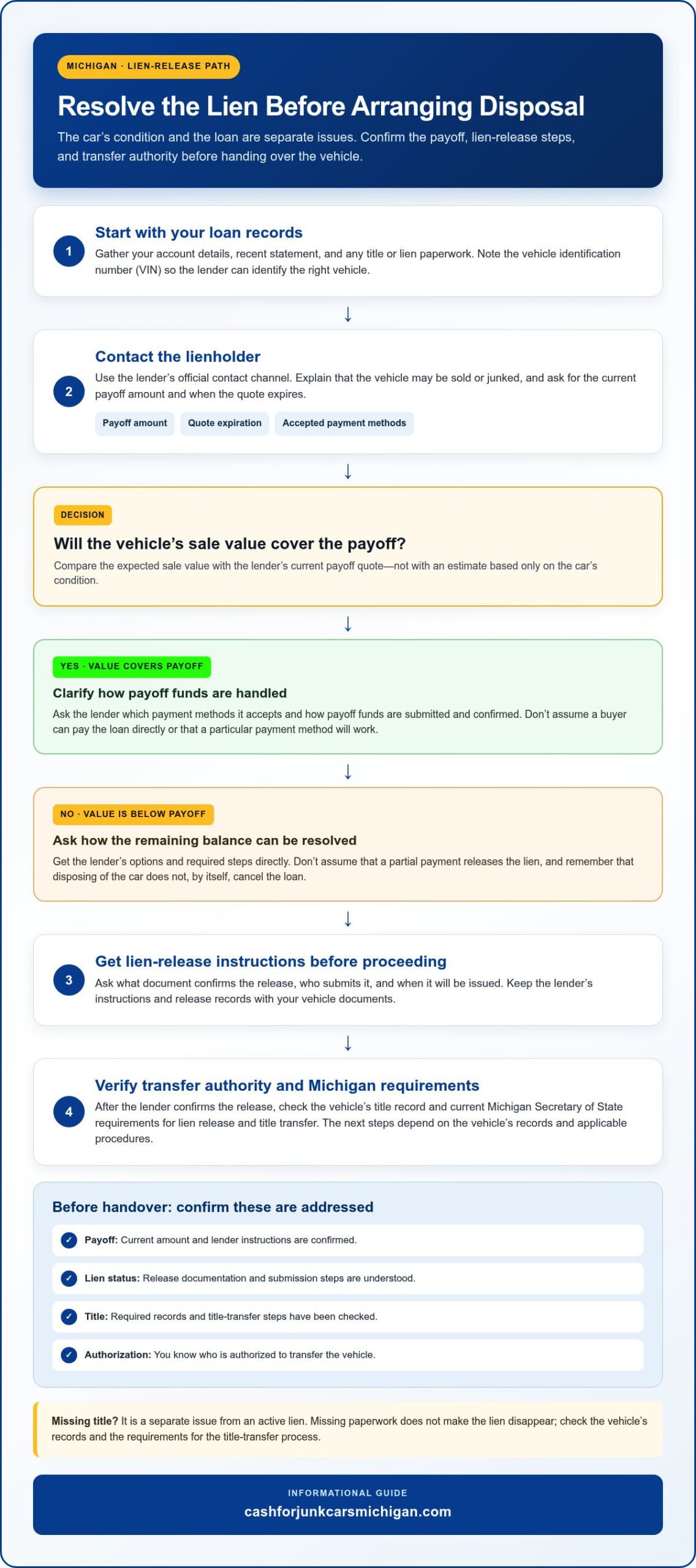
Start with the lender, not the towing or sale arrangements. The lienholder can tell you what remains due and what it requires to release its interest. When junking a car with a lien on the title, get those instructions before agreeing to transfer the vehicle. Payoff procedures, release documents, and title steps can vary by lender and by the vehicle’s records.
- Review your loan information. Find the account details, recent statement, and any title or lien paperwork you have. Note the vehicle identification number (VIN) so the lender can locate the right account and vehicle.
- Contact the lienholder. Use the lender’s official contact channel and explain that the vehicle may be sold or junked. Ask for the current payoff amount and how long that figure remains valid. A payoff quote may change, so don’t rely on an older statement.
- Clarify how payoff funds are accepted. Ask what payment methods the lender accepts and whether special steps apply if the vehicle is being sold. Don’t assume a buyer’s payment can be applied directly to the loan or that a particular payment method will work.
- Get release instructions before proceeding. Ask what document confirms the lien release, who submits it, and when it will be issued. Write down the instructions and any reference number or next step the lender provides.
What should you ask the lienholder?
Be specific. Ask how the lender handles the situation if the car’s sale value won’t cover the payoff, and what options it allows for resolving the remaining balance. Don’t assume a partial payment releases the lien. Get the answer and next steps directly from the lender.
- What is the payoff amount, and when does it expire?
- How can payoff funds be submitted and confirmed?
- What release documentation will be issued, and who files or submits it?
- What steps apply if the vehicle’s value is below the loan balance?
What happens after the lien is released?
Once the lender confirms the release, keep its documentation and use it to prepare for the title-transfer process. The lender can explain whether it sends information electronically or provides paperwork. The next step depends on the vehicle’s title record and current state procedures.
The lienholder is your first contact for lien-release instructions. Michigan uses electronic lien and title processes; the American Association of Motor Vehicle Administrators explains Electronic Lien and Title (ELT) Systems. Verify current Michigan Secretary of State requirements for any forms, submissions, title issuance, and processing steps before transferring the vehicle.
Keep copies of lender communications and release records with your vehicle documents. If a payoff quote expires before you’re ready to proceed, contact the lienholder again for an updated amount rather than relying on the old quote or assuming the release is underway.
After the lien-related transfer is resolved or otherwise authorized, you can consider a junk car buyer in Michigan as a disposal option.
Compare Your Options When the Loan Balance Exceeds the Car’s Value
If the car may sell for less than the loan payoff, pause before agreeing to a sale or disposal. The difference between the payoff and the proceeds may still need to be addressed. A low-value or damaged vehicle doesn’t make that shortfall disappear, and scrap proceeds don’t automatically clear the loan or release the lien.
Compare the options below with the lienholder’s instructions. The right next step depends on the payoff, the vehicle’s value, and how the lender handles release during a transfer.
| Situation | Question to resolve | Safe next action |
|---|---|---|
| You can pay the full payoff before the sale. | How will the lender confirm payment and release its interest? | Get the lender’s payment and release instructions, then follow them before arranging the transfer. |
| The sale proceeds may cover the payoff. | Can the proceeds be applied to the loan as part of the transaction, and how will the lien release be handled? | Coordinate the payment and release steps with the lienholder before handing over the vehicle. |
| The car may be worth less than the payoff, or you’re unsure of its value. | What happens to any remaining balance, and what does the lender require before releasing the lien? | Ask the lienholder for instructions before accepting an offer or disposing of the car. |
| The car has been damaged in a potentially covered loss. | How will an insurance settlement affect the loan payoff and lien release? | Confirm the settlement process with both the insurer and the lienholder. |
What if the car is worth more than the payoff?
If the sale proceeds exceed the payoff, they may be applied to the amount owed, subject to the lender’s process. Don’t assume the buyer can pay the lender directly or that the lien will be released automatically during the sale. Ask the lienholder how it will receive and confirm the payoff, what release documentation it will provide, and how to proceed with the transfer. The amount, timing, and handling depend on the transaction and lender instructions.
What if the car is worth less than the payoff?
A shortfall is the gap between what the car can bring and what remains on the loan. For instance, if an offer is below the lender’s payoff quote, the sale alone may not satisfy the full debt. Ask the lienholder what options and release requirements apply to your situation. Don’t assume the lender will waive the difference or approve a transfer before the lien is resolved.
If the car was damaged in an event that may be covered by insurance, ask the insurer how a settlement is handled and contact the lender about the loan and lien. Confirm how the two processes fit together before making disposal plans. Comparing these options helps you identify what to clarify first, without treating the car’s condition or sale proceeds as proof that the debt has been settled.
Before You Hand Over a Lien-Affected Car, Check These Details
Before scheduling disposal, make sure the lien and transfer paperwork are addressed and keep records of what happened. This checklist helps distinguish missing paperwork from an unresolved lender interest. A buyer may accept a vehicle without a physical title, but that alone doesn’t authorize a transfer while a lien remains active.
What documents and details should you gather?
Gather the records you have before arranging a handover. Use them to identify the vehicle, follow the lender’s instructions, and keep a clear record of the transaction. Michigan document names, forms, and filing requirements can depend on the circumstances, so verify current details with the Michigan Secretary of State.
- Loan details: Gather the lender’s name, account information, recent loan statement, payoff quote, and any written payoff or lien-release instructions.
- Vehicle identification: Have the VIN available and check that it matches the vehicle and your records.
- Title paperwork: Collect the paper title if you have it, along with any title or lien documents from the lender. Note if the title is electronic or unavailable.
- Release and transfer records: Keep copies of lien-release confirmation and transfer documents once issued or completed. Verify which Michigan forms or submissions apply before filing anything.
- Pickup and sale records: Save the buyer’s written offer or transaction record and any pickup receipt or other handover documentation provided.
For help understanding vehicle-condition terms, refer to the article “What Is a Junk Car?” A damaged or non-running condition may explain why you’re disposing of the vehicle, but it doesn’t establish whether a lien has been released.
How do you avoid an unauthorized handover?
Before committing to a pickup, confirm who has authority to approve the transfer and whether the lienholder’s release or other instructions have been satisfied. Don’t treat acceptance of a vehicle without a title as permission to transfer one with an unresolved lien. A buyer can arrange disposal, but that doesn’t remove the lien or cancel the loan.
Keep copies of the records related to your sale, and don’t hand over the vehicle based only on an assumption that the paperwork can be sorted out later. Michigan title requirements can change or vary by situation, so verify current transfer steps with the Secretary of State. For the separate sale process, the article “How to Sell My Junk Car for Cash” can help you prepare once you’re authorized to proceed.
After the lien-related transfer is resolved or otherwise authorized, you can get a quote for your junk car and arrange free removal. Cash For Junk Cars Michigan buys vehicles without keys, registration, or title. Missing documents and an unresolved lien are different matters.
Junk the Car After the Lien Is Addressed: Your Next Steps
Once the lien is released or the lender’s instructions otherwise authorize the transfer, you can arrange to sell or dispose of the vehicle. This is the time to compare a junk-car buyer’s offer and plan pickup. A missing physical title is a separate paperwork issue: Cash For Junk Cars Michigan buys vehicles with no keys, registration, or title, but that doesn’t mean it accepts vehicles with unresolved liens.
When junking a car with a lien on the title, first establish who can authorize the transfer. Keep any lender release or transfer instructions with your records, and follow current Michigan title requirements.
What to expect when arranging a junk-car pickup
Share basic details about the car, such as its make, model, year, condition, and location, to receive a quote. If you accept and the sale proceeds, the driver pays the quoted amount in cash at pickup. Towing for purchased vehicles is FREE of charge.
Same-day pickup is usually available if you call early enough in the day, but it isn’t guaranteed. Cash For Junk Cars Michigan offers its best price within a 50-mile radius of your location. Describe the vehicle’s condition clearly so the quote reflects the car you’re selling.
How to take the next step in Michigan
First, make sure you’re authorized to transfer the vehicle. A buyer’s ability to purchase a car without title paperwork doesn’t release an active lien, pay off a loan, or replace the lienholder’s instructions. Once you’ve resolved your transfer authority, arrange a quote and pickup without confusing the sale process with the lien process.
For broader guidance on preparing a vehicle for sale, see Cash For Junk Cars Michigan: The Ultimate Guide. Then, if the lien-related transfer is resolved or otherwise authorized, call Cash For Junk Cars Michigan at 877-345-3559 to discuss your vehicle and get a quote. Have the vehicle details ready, and keep your lender and title records available as you complete the handoff.
Make Your Next Move With Confidence
Let clear records, not pressure to get an unwanted car off your property, set the pace. Before moving forward with junking a car with a lien on the title, make sure you understand what still needs to happen for you to authorize the transfer. If something is unclear, pause and resolve that detail before arranging the handoff. Taking care of it first can help prevent confusion later.
Once you’re authorized to transfer the vehicle, you can move ahead with a junk-car sale that fits your situation. Cash For Junk Cars Michigan buys vehicles in any condition, including vehicles without keys, registration, or title. Towing is FREE of charge for purchased vehicles, and cash is paid on the spot after a quote is given at pickup.
Call Cash For Junk Cars at 877-345-3559 when you’re ready to discuss your vehicle and get a quote. Take it one step at a time, and you can move forward with greater confidence.
Frequently Asked Questions
Can you junk a car with an active lien on the title?
In Michigan, an active lien must be legally resolved before the vehicle can be scrapped. Don’t arrange a handover based only on the car’s condition or a buyer’s offer. Ask the lienholder what must happen to clear the lien, then verify current title-transfer requirements with the Michigan Secretary of State. This is the key first step when junking a car with a lien on the title.
Does junking a car remove the loan or the lien?
No. Disposing of the car doesn’t, by itself, erase the loan or release the lien. Those are separate matters from whether the vehicle runs or has value. If a vehicle is taken away before the lender’s claim is resolved, the loan may still have a balance. Review your loan terms and get the lienholder’s instructions before treating the debt or lien as settled.
What should I ask my lender before junking a car?
Ask for the current payoff amount, how long the quote remains valid, and how the lender accepts payment. Also ask what confirms the lien release, who submits the release information, and what to do if the car’s value won’t cover the payoff. Keep notes and save written instructions. If more than one person is listed on the loan or title, clarify whose approval the lender requires.
What happens if my car is worth less than the loan payoff?
The difference between the payoff and the car’s sale value may leave a balance to address. Don’t assume the lender will waive it or that money from scrapping the car will cover it. Ask the lienholder what payoff and release options apply before agreeing to a transfer. If insurance may cover damage to the car, confirm with both the insurer and lender how a settlement affects the loan.
Can I junk a car in Michigan if I do not have the title?
Possibly, but missing the paper title and having an active lien are different issues. In Michigan, a qualifying vehicle that is at least 10 years old and valued below $2,500 may be sold without a physical title. The lien still must be legally settled before the vehicle can be junked. Verify eligibility and current paperwork requirements with the Michigan Secretary of State.
Can a junk car buyer pay off my car loan?
Don’t assume a junk car buyer will pay your lender directly. Payment arrangements depend on the buyer, lender, and transaction, and a buyer’s offer doesn’t automatically release the lien. Before accepting an offer, find out whether the lender will accept funds through the sale and how it will document the release. If the planned payment won’t cover the payoff, ask the lender how to handle the remaining balance.
How do I prove that a lien has been released?
Request confirmation from the lienholder and keep any release notice or other documentation it provides. Michigan uses an Electronic Lien and Title system. After payoff, the lienholder releases the lien electronically, and the state mails a paper title to the owner. Keep the new title and release records with your sale paperwork, and verify the current process with the state.
Can I sell a junk car if the lender still holds the title?
Possibly, but first determine whether the title is held electronically or whether the lender has a physical document, then ask the lienholder what authorizes a transfer. In Michigan, a lender’s electronic title record and a missing paper title aren’t the same as a released lien. Don’t hand over the vehicle until you understand the lender’s requirements and have confirmed the applicable transfer steps with the state.