

Junking a car doesn’t automatically make it an environmentally sound choice. The environmental impact of junking a car depends on what happens after pickup: hazardous fluids need careful handling, and reusable parts and scrap materials only help when they’re properly recovered. That uncertainty matters when you’re deciding whether to repair an aging vehicle or let it go.
It’s reasonable to wonder whether recycling claims tell the whole story, or whether a car could simply be moved from your driveway without responsible processing. This article explains potential environmental benefits and risks, what responsible vehicle handling may involve, and what to ask before choosing a disposal option in Michigan.
You’ll also find a practical way to compare repair, resale, donation, and junking. If pickup is the right choice, ask what the buyer can explain about fluids, reusable parts, and remaining materials. That can help you make an informed decision without assuming every component will be recycled.
Key Takeaways
- The environmental impact of junking a car depends on how the vehicle is handled after collection, not simply on whether it’s called recycled.
- A vehicle may be assessed for parts recovery, fluid management, and material processing, but the steps can vary.
- Compare repair, resale, donation, and junking based on the car’s condition, whether it can stay in use, and your priorities.
- Ask specific questions about fluid handling, reusable parts, towing arrangements, and paperwork before choosing a disposal option.
- In Michigan, clear answers can help you make an informed choice, though no pickup option guarantees every material will be recovered.
Environmental Impact of Junking a Car: The Main Tradeoffs
Junking a car means sending it to an end-of-life disposal or recovery route. It doesn’t describe one guaranteed process. A vehicle may have usable parts removed, materials separated for recovery, and other components disposed of. Responsible processing means handling the vehicle rather than abandoning or dumping it, where fluids and loose parts could remain exposed to the environment.
The environmental impact of junking a car depends on what the next handler actually does. Metals and working components may be put to use again, but that outcome isn’t automatic. The vehicle’s condition, the materials that can be recovered, and the receiving facility’s practices all matter.
Can junking a car reduce environmental harm?
Recovering steel, aluminum, copper, and usable components can help keep those materials in circulation and reduce demand for newly extracted raw materials. A general overview of the vehicle recycling process describes steps such as dismantling, fluid removal, shredding, and material recovery. Recycling still uses energy, and it doesn’t erase the impacts of manufacturing replacement products. What can be recovered varies by vehicle and facility.
How can improper disposal harm land and water?
A damaged or unattended vehicle can leak oil, coolant, fuel, and other fluids onto the ground. Rain can carry contaminants from the vehicle or dumped parts toward drains, streams, and other waterways. Batteries and discarded materials also need suitable handling. Unmanaged vehicles can pose environmental risks beyond visual blight, especially when leaks go unnoticed or parts are left scattered.
That matters in Michigan, where protecting local soil and waterways also helps protect the Great Lakes. Ask how fluids are managed and where the vehicle goes after pickup. A tow or the word “recycling” doesn’t confirm responsible processing. Clear answers can help you assess the option, even though you may not be able to verify or control every downstream step.
What Happens to a Junk Car After Collection?
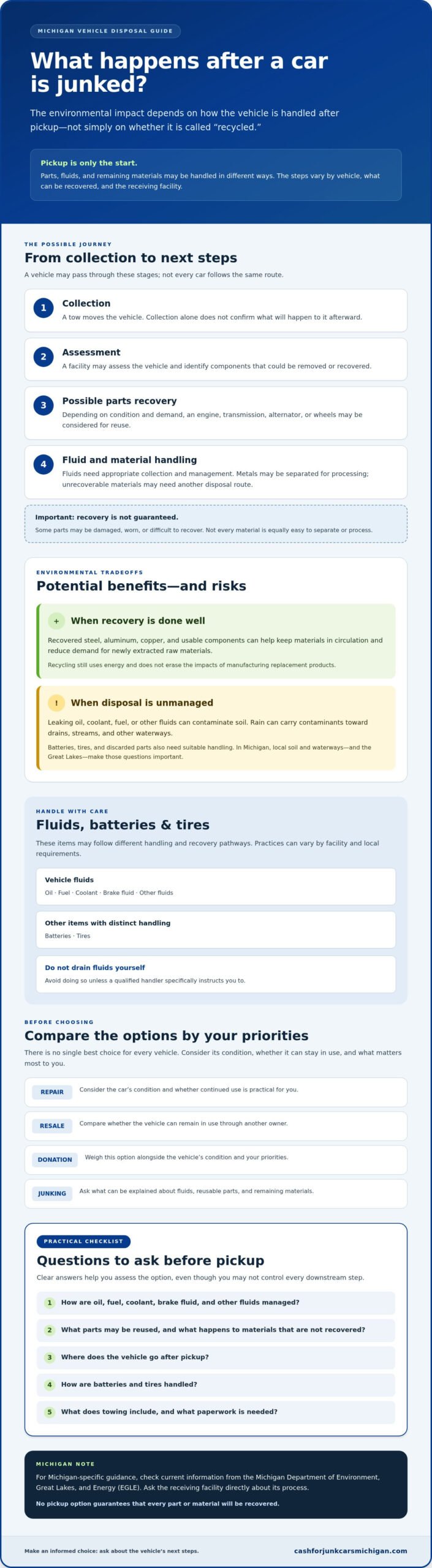
A junk car may move from collection to assessment, possible parts recovery, fluid management, and material processing, but the exact steps depend on the vehicle, the facility, and what can be recovered. Pickup is only the start. It doesn’t confirm which parts will be reused or how remaining materials will be handled.
At an end-of-life facility, staff may assess the vehicle and identify components that could be removed. The car may then be dismantled or prepared for further processing. Some parts may be suitable for reuse; others may be damaged, worn, or difficult to recover. Metals can be separated and processed for material recovery, while materials that can’t be recovered may need another disposal route.
Which vehicle parts may be reused or recovered?
Depending on condition and demand, components such as an engine, transmission, alternator, or wheels may be considered for reuse. A damaged or incomplete vehicle may have fewer recoverable parts. Metal components can also be sorted for processing, but not every material is equally easy to separate or recover. Ask the receiving business what it can explain about its process instead of assuming every part will find another use.
Why do fluids, batteries, and tires need careful handling?
Oil, fuel, coolant, brake fluid, and other vehicle fluids need appropriate collection and management to avoid leaks or improper disposal. Batteries and tires follow distinct handling and recovery pathways, which can vary based on facility practices and local requirements. Don’t assume they’ll be managed the same way as the vehicle’s metal.
For Michigan-specific guidance, check current information from the Michigan Department of Environment, Great Lakes, and Energy (EGLE), and ask the receiving facility how it handles fluids, batteries, and tires. If you’re arranging pickup, clarify what the towing service includes and whether the vehicle can be collected with its fluids and components still in place. Avoid draining fluids yourself unless a qualified handler specifically instructs you to do so.
These steps show why the environmental impact of junking a car can’t be judged by collection alone. If you’re comparing pickup options in Michigan, Michigan junk car pickup is one option to consider. Cash For Junk Cars Michigan buys unwanted, damaged, and non-running vehicles throughout the state, with free towing for vehicles it purchases. Pickup doesn’t establish what happens afterward, so ask direct questions about the vehicle’s next steps.
Is Junking a Car Better Than Repairing, Donating, or Selling It?
There isn’t one best choice for every vehicle. Consider whether the car is safe, whether repairs are practical, and whether another owner could use it. Keeping a roadworthy vehicle in service may avoid replacing it early, while repair work also uses parts and resources. Weigh the environmental impact of junking a car against what repair, resale, or donation would mean for this specific vehicle.
Use this comparison to frame the decision, not to identify a universal environmental winner. A sale or donation doesn’t guarantee the vehicle will stay on the road; it may later need major repairs or go to end-of-life processing.
| Option | Environmental consideration | Practical limitation |
|---|---|---|
| Repair | Can keep a roadworthy vehicle in use and may delay replacement. | Safety, repair feasibility, and the parts required all matter. |
| Resale | May let another owner continue using a vehicle that remains suitable for the road. | A buyer’s intended use and the car’s later condition aren’t guaranteed. |
| Donation | May put a usable vehicle to another purpose or owner. | Acceptance rules and what happens afterward vary by organization. |
| Junking | May allow usable components and materials to be recovered. | Collection alone doesn’t confirm what will be reused or processed. |
When might repair, resale, or donation make sense?
If the vehicle is safe and roadworthy, keeping it or selling it may help it serve another driver. Repair is worth considering when the work is practical and the car can remain safe to use. Before donating, check the organization’s acceptance rules, including the vehicle’s condition and any required paperwork. No option is automatically greener; the likely use matters.
When might end-of-life processing be the practical choice?
A severely damaged, unsafe, or non-running vehicle may no longer be practical to repair, sell for continued road use, or donate. Junking can then be a workable next step, but the vehicle’s condition alone doesn’t reveal which parts or materials will be recovered. For more context on what qualifies, see the guide What Is a Junk Car? The Official Definition for Car Owners.
Before deciding, compare the vehicle’s likely future in each option with the effort and resources involved. A car that can safely serve another owner presents a different choice from one that can’t reasonably return to the road.
How to Choose a More Responsible Junk-Car Disposal Option
Pickup removes the vehicle from your property, but it doesn’t confirm how the car or its parts will be handled. Ask specific questions before you agree. Clear answers help you compare options and assess environmental claims without assuming every part will be reused.
Questions to ask a Michigan junk-car buyer or recycler
- Where will the vehicle go after pickup? Ask whether it goes directly to a processing facility or passes through other businesses.
- How are fluids, batteries, and tires handled? Ask what the process is for these materials and who manages them.
- Which parts or materials might be recovered? Find out whether reusable components are assessed and what happens to materials that can’t be recovered.
- What does “fully recycled” mean? Ask which parts or materials the claim covers and whether the business can explain its process.
- Are environmental credentials or recovery rates being claimed? Ask who issued the credential or how the rate was determined. Verify the details before relying on the claim.
A provider may not be able to guarantee the final outcome for every component. It should still be able to explain what it knows about the vehicle’s next steps. These questions can help you judge the environmental impact of junking a car more carefully.
For an overview of the transaction itself, see How to Scrap a Car for Cash: A Simple 5-Step Guide. Treat broad environmental promises as a starting point for questions, not proof of a specific recovery result.
What paperwork and handoff details should owners confirm?
Before the vehicle leaves, ask what ownership documents are needed and how the transfer will be recorded. Michigan requirements can depend on the situation, so confirm current title and transfer guidance with the Michigan Secretary of State or another official state source. If your paperwork is missing or your circumstances are unusual, don’t rely on a general statement.
Keep a record of the buyer or towing provider, the pickup date, and any receipt or transfer documents you receive. This gives you a record of who took possession of the vehicle and something to refer to if questions come up. For sale-process guidance, consult How to Sell My Junk Car for Cash: The Complete 2026 Guide.
If selling an unwanted vehicle is your next step, explore junk car buying and free removal in Michigan. Ask about towing and paperwork before arranging pickup, and request clear answers about what the service covers.
Junking a Car in Michigan: Make an Informed Next Move
The word “recycling” isn’t enough to confirm what happens to a vehicle. Environmental outcomes depend on how the car is handled, which parts or materials can be recovered, and how remaining materials are managed. Ask direct questions before arranging pickup, but keep in mind that no buyer or towing service can guarantee every component will be recovered or reused.
A simple decision path for Michigan vehicle owners
Start with safety and roadworthiness. If the car can be kept safe and practical to use, consider repair. If not, weigh resale, donation, or end-of-life disposal based on the vehicle’s condition and whether it can serve another owner. Donation organizations may have their own acceptance rules, so check before making arrangements.
If the car is no longer practical to keep, compare pickup arrangements and clarify the handoff. Ask where the vehicle goes next, what the towing service includes, and how fluids, batteries, tires, and potentially reusable parts are handled. Confirm which documents you’ll need and keep any transfer or pickup records you receive. Michigan title and transfer requirements can depend on the situation, so check current guidance with the Michigan Secretary of State before completing the transfer.
These steps won’t let you control every downstream outcome. They can help you understand what a provider can explain and avoid treating a broad environmental claim as proof of a specific result.
Arrange pickup without overstating environmental outcomes
Cash For Junk Cars Michigan buys unwanted, damaged, and non-running cars, trucks, and SUVs throughout Michigan. Free towing is included for vehicles the company buys. Pickup is a practical way to remove an unwanted vehicle, but it doesn’t confirm how its parts or materials will be processed. Ask about current service details and the handoff before deciding.
If selling is the right next step, Request a junk-car offer and free towing. Use the questions in this guide to make an informed choice, and confirm any paperwork requirements through official Michigan sources.
Make Your Next Vehicle Decision With Confidence
The environmental impact of junking a car depends on how it’s handled after pickup. Reusable parts and materials may be recovered, but “recycling” alone doesn’t guarantee a specific outcome. Ask what happens to fluids, batteries, tires, and remaining materials, then compare junking with repair, resale, or donation based on the vehicle’s condition and likely future use.
If an unwanted vehicle is no longer practical to keep, Cash For Junk Cars Michigan buys cars, trucks, and SUVs in varied conditions throughout Michigan. Free towing is included for vehicles the company buys. Pickup is a practical next step, not a promise about how every vehicle or component will be processed.
Request a junk-car offer and free towing, and ask any questions you have about pickup and the handoff. Clear answers can help you move forward with confidence.
Frequently Asked Questions
Is junking a car good for the environment?
It can help when end-of-life processing recovers usable parts or materials and manages hazardous substances appropriately, but junking isn’t automatically sustainable. The environmental impact of junking a car varies with its condition and the receiving facility’s practices. Abandonment or improper disposal can leave fluids and components exposed, creating avoidable risks. Before arranging pickup, ask where the vehicle will go and how the handler manages fluids, parts, and remaining materials.
What happens to a car after it is junked?
A junk car may be collected, assessed, and checked for parts that could be recovered. Fluids may be removed or managed, and the remaining materials may be separated and processed. This is a general pathway, not a guarantee that every car follows the same steps. The destination and facility practices matter. Ask the buyer or recycler what happens after pickup instead of assuming every component will be reused.
Can junk cars pollute soil or water?
Yes. Leaking oil, fuel, coolant, or other fluids can pose contamination risks, especially if a vehicle is abandoned or dismantled improperly. Poorly managed parts and materials may also create environmental concerns. This doesn’t mean a specific vehicle has contaminated a site, but it shows why proper collection and handling matter. Michigan owners can check current disposal guidance with the Michigan Department of Environment, Great Lakes, and Energy and other relevant state agencies.
Are junk cars recycled completely?
No. Don’t assume every part or material from a junk car will be reused or recycled. Some components may be suitable for recovery, while others may need separate handling or disposal. The outcome depends on the vehicle’s condition, available recovery processes, and the facility’s practices. Ask what a provider means by “recycled,” which parts or materials the claim covers, and whether it can explain the vehicle’s likely route after collection.
Is it better for the environment to repair or junk a car?
There’s no universal answer. A safe vehicle that can be repaired may remain useful and avoid premature replacement. A severely damaged or unsafe car may be better suited to end-of-life processing. Repairs use parts and resources, while manufacturing a replacement vehicle also has environmental impacts, so a simple comparison can be misleading. Weigh roadworthiness, repair feasibility, likely future use, and the care taken in any disposal process.
What should I ask a junk-car buyer about recycling?
Ask where the vehicle goes after pickup, how fluids and batteries are managed, whether usable parts may be recovered, and what happens to remaining materials. If the buyer says the car is “fully recycled,” clarify which materials that means and how the claim is supported. Confirm towing arrangements, required paperwork, and how the handoff will be documented. Clear answers help you understand the process, but can’t guarantee a particular environmental outcome.
Does Michigan have rules for junk-car disposal?
Title, transfer, and waste-handling requirements may depend on your situation and current state rules. If paperwork is missing or your circumstances are unusual, don’t rely on a general online explanation. Check current guidance with the Michigan Department of Environment, Great Lakes, and Energy for environmental questions and the relevant Michigan vehicle agency for title or transfer information. Confirm which documents are needed before handing over the vehicle, and keep records of the transaction.