

Did you know your rotting driveway eyesore could be fueling Michigan’s $17 billion recycling economy within days? Most vehicle owners worry about legal liability or getting a “red tag” notice from code enforcement, yet they stay stuck because the process feels like a mystery. You need to know exactly what happens to a junked car in Michigan once the tow truck pulls out of your driveway. It’s stressful to deal with Michigan Secretary of State title laws and the fear of hazardous fluids leaking into the soil.
We understand that you want a fast, clean break from your unwanted vehicle. This guide removes the confusion and shows you the entire lifecycle of a scrap vehicle from start to finish. You’ll discover how to legally hand over the keys, even if your car is over 10 years old and missing a title. We explain the updated 2025 hazardous waste rules for fluid drainage and show how your car’s steel is processed to support local manufacturing. From the $15 duplicate title fee to the final metal shredder, you’ll see how to turn a liability into immediate cash without any unnecessary fuss.
Key Takeaways
- Learn the legal requirements for junking vehicles in Michigan, including how to handle ownership transfers for cars over 10 years old without a title.
- Discover exactly what happens to a junked car in Michigan during the dismantling stage, where hazardous fluids are drained and reusable parts are harvested.
- Understand the industrial recycling process that turns a crushed steel shell into raw material to save energy and protect the local environment.
- Find out how to bypass the stress of local code enforcement and “red tag” notices by securing same-day pickup and immediate cash payment.
The Legal Handover: How to Junk a Car in Michigan Correctly
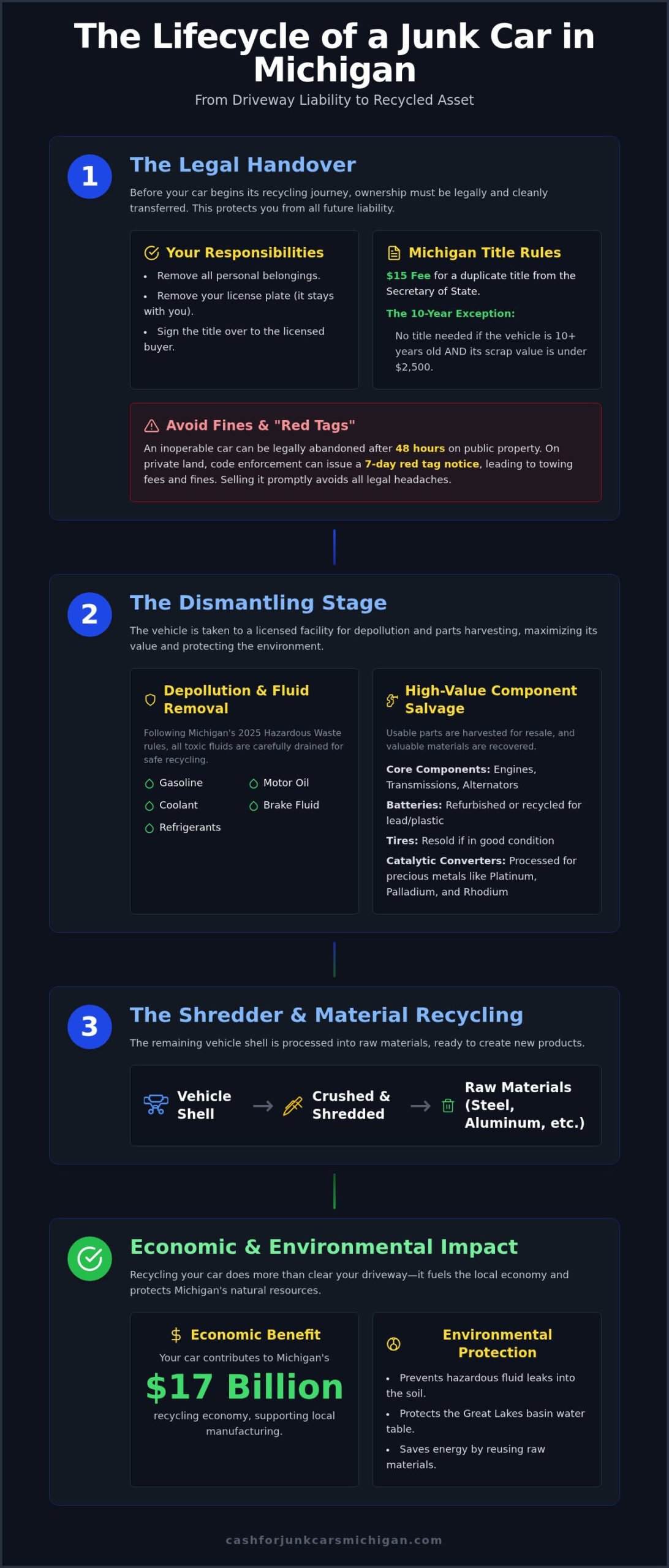
Michigan law defines a junk car as a vehicle so damaged or stripped that its only worth is parts or scrap metal. It cannot safely drive on public roads. When you decide to move forward, you must understand what happens to a junked car in Michigan from a legal standpoint. The first step is a clean transfer of ownership to a licensed buyer. You must remove all personal belongings and your license plates. In Michigan, the plate stays with you, not the car. You can transfer it to a new ride or return it to the Secretary of State. This simple step protects you from future tickets or liability.
To stay compliant, follow the established sell my junk car process. This ensures you aren’t liable for the vehicle once it leaves your property. Professional buyers provide the necessary paperwork to prove you no longer own the asset. This is a transactional exchange designed for speed and legal protection. You get paid on the spot and walk away with zero obligations.
Michigan Title Requirements and Paperwork
If you have a clean title, sign it over to the buyer at the time of pickup. If you lost yours, the Secretary of State charges a $15 fee for a duplicate. Michigan also has a specific 10-year rule that simplifies things for older vehicles. You can sell a vehicle that is at least 10 years old without a title if its scrap value is under $2,500. This is a major benefit for owners of aging trucks or SUVs. Understanding what happens to a junked car in Michigan means knowing the buyer will report the destruction of the vehicle. They notify the Secretary of State that the vehicle is now junked. This official record effectively ends your responsibility for the VIN.
Avoiding Abandoned Vehicle Fines
Don’t let an inoperable car sit in your yard. Michigan law is strict about abandoned vehicles. A car left on public property for 48 hours is legally abandoned. Even on private land, local code enforcement can issue a seven-day red tag notice. This leads to expensive towing fees and court fines. Professional buyers use the TR-52 form to document the disposal process correctly. This paperwork is vital for the broader vehicle recycling process because it proves the car was handled by a legitimate facility. Selling your car immediately stops the clock on legal headaches. You get cash on the spot instead of a fine on your record. It’s the most efficient way to clear your property and follow the law.
The Dismantling Stage: Harvesting Parts and Fluids
Once the tow truck leaves your property, the vehicle enters the dismantling phase. This is a critical step in understanding what happens to a junked car in Michigan. The car doesn’t just sit in a lot. It undergoes a meticulous inspection to identify parts with resale value. Experts look for core components like engines, transmissions, and alternators that can be refurbished for other drivers. This process ensures that every usable piece of the vehicle stays in the economy rather than a landfill.
Environmental safety is the top priority during this stage. Depollution is the mandatory removal of hazardous liquids before the vehicle shell is sent to the industrial crusher. This process ensures that no toxic chemicals leak during the final stages of recycling. It’s a standard requirement that protects both the facility and the surrounding community.
Hazardous Fluid Removal
Michigan’s updated Hazardous Waste Management rules, which became effective on May 5, 2025, dictate strict protocols for fluid disposal. Technicians drain gasoline, motor oil, and engine coolant for recycling. They use specialized equipment to capture brake fluid and air conditioning refrigerants. These substances are highly toxic and cannot be poured down drains or left to seep into the ground. Proper handling prevents these pollutants from reaching the Great Lakes basin. This protects Michigan’s water table and soil quality. If you want to clear your yard and protect the environment, you can get cash for junk cars today.
Salvaging High-Value Components
Before the metal is shredded, the yard harvests every valuable piece left. Many owners consider selling car for parts, but a professional buyer handles this labor-intensive step for you. Catalytic converters are high-priority items. They contain precious metals like platinum, palladium, and rhodium. These metals are extracted and sent to specialized refineries for industrial reuse.
The dismantling team also removes lead-acid batteries and usable tires. Batteries are often refurbished or broken down for their lead and plastic components. Tires in good condition enter the secondary market. If they’re worn out, they’re shredded for use in rubberized asphalt or playground surfaces. This stage maximizes the economic value of the vehicle while minimizing waste. It ensures that what happens to a junked car in Michigan contributes to a sustainable, circular economy.
The Shredder: Turning a Shell into Raw Material
Once the parts and fluids are gone, the car is just a metal shell. A heavy-duty crusher flattens the remaining body into a thin “pancake” for easier transport. This is a vital part of what happens to a junked car in Michigan before it reaches the final stage. These flattened shells are loaded onto trailers and sent to industrial shredding facilities. The process is fast, efficient, and entirely focused on material recovery.
The shredder is a massive machine. It uses rotating hammers to tear the vehicle into fist-sized chunks in seconds. This isn’t just about destruction; it’s about preparation. The machine reduces the car to a manageable state for high-speed sorting. It turns a complex machine into raw, sorted commodities ready for the furnace.
Separating Ferrous and Non-Ferrous Metals
Sorting happens instantly. Large magnetic drums pull ferrous metals like steel and iron away from the mix. As of August 18, 2026, sheet iron is valued at $200.00 per net ton. Recovering these materials is the primary driver of the scrap industry. It ensures that the bulk of your vehicle’s weight is returned to the manufacturing supply chain.
Non-magnetic materials continue down the conveyor line. Facilities use eddy current separators to bounce non-ferrous metals like aluminum, copper, and brass into separate bins. These metals are often more valuable per pound than the steel itself. Michigan’s modern recycling facilities operate with high efficiency to ensure almost no metal is wasted during this mechanical separation.
Managing Auto Shredder Residue (ASR)
Not everything in a car is metal. About 20% to 25% of the vehicle consists of plastic, glass, rubber, and upholstery. This mixture is known as Auto Shredder Residue or “fluff.” While some still goes to landfills, Michigan’s recycling rate reached a record 26% in 2025 because researchers are finding ways to recycle this fluff into fuel or construction materials. Innovation in this area is constantly reducing the environmental footprint of the scrapping process.
The final destination for the recovered metal is often a local Michigan steel mill. Recycling steel is highly efficient. It uses roughly 74% less energy than producing steel from raw iron ore. This creates a closed-loop system where your old car becomes the raw material for new products. This industrial cycle is the definitive answer to what happens to a junked car in Michigan after the paperwork is signed. It’s a fast, industrial process that fuels our state’s manufacturing core and protects our natural resources.
Environmental and Economic Impact in Michigan
Your old vehicle is more than just scrap. It’s a critical component of Michigan’s industrial engine. The automotive recycling industry contributes over $17 billion annually to our state’s economy. Understanding what happens to a junked car in Michigan means seeing the bigger picture of resource recovery. For instance, recycling steel uses 74% less energy than producing it from raw iron ore. This efficiency is why the junk cars you sell are in high demand. They provide a steady stream of raw material for Detroit’s manufacturing plants, keeping the local supply chain moving without the high environmental cost of mining.
Recycled auto scrap is the lifeblood of new vehicle production in the Motor City. When a car is shredded and sorted, that high-quality steel and aluminum is melted down and repurposed. This circular system reduces the need for virgin materials and lowers the carbon footprint of every new car that rolls off the assembly line. It’s a fast, efficient way to keep Michigan at the forefront of global manufacturing while protecting our natural resources.
Protecting the Great Lakes Ecosystem
Leaving a vehicle to rot in a backyard is a major liability. Over time, hazardous substances like mercury and lead can seep into the groundwater. This directly threatens the Great Lakes basin. Professional buyers follow Michigan Department of Environment, Great Lakes, and Energy (EGLE) standards. They ensure total containment of pollutants during the dismantling phase. This compliance is a major part of what happens to a junked car in Michigan at a licensed facility. It’s the only way to dispose of a vehicle without risking heavy environmental fines or ecological damage.
Supporting Local Michigan Jobs
The recycling network supports over 72,000 jobs across the state. This includes tow truck drivers, yard technicians, and steel processors. It’s a massive, interconnected system that relies on a steady flow of end-of-life vehicles. You should know that scrap car prices aren’t random. They fluctuate based on local industrial demand and global metal markets. When you sell your car, you’re participating in a circular economy that keeps Michigan’s automotive heritage alive. You get paid, and the state’s manufacturing core gets the resources it needs. If you’re ready to clear space and get paid, contact Cash For Junk Cars Michigan for a fast quote today.
The Fastest Way to Junk Your Car in Michigan
You now understand what happens to a junked car in Michigan from the moment it leaves your driveway to its final transformation into raw steel. Now you need a partner who moves as fast as the industrial process itself. Don’t waste time with national middlemen who don’t understand Michigan Secretary of State regulations. Choosing a local expert ensures you get the best market rates and the fastest removal service. Cash For Junk Cars Michigan simplifies the entire lifecycle for you. We turn your problematic asset into immediate liquidity without the typical administrative headaches.
Our process is designed for speed and efficiency. We buy vehicles in any condition, including those with missing titles or no keys. We handle the logistics and the paperwork so you can move on with your day. Stop worrying about legal liability or “red tag” notices from code enforcement. We provide a definitive, no-hassle solution that puts money in your pocket on the spot.
Free Towing and Statewide Coverage
We cover every corner of Michigan. Whether you are in the heart of Detroit, the suburbs of Grand Rapids, or the remote areas of the Upper Peninsula, our team reaches you quickly. We provide complimentary logistical support with every purchase. This means you never pay for a tow truck. Many national companies hide fees in the fine print, but we don’t. The quote you receive is the exact amount of cash you get when we arrive. We schedule pickups around your busy life to ensure the transaction is as seamless as possible. Same-day pickup is often available, allowing you to clear your property in hours rather than weeks.
Get an Instant Quote Now
Getting started is straightforward. Call or text us to receive a fast offer based on current cash for junk cars market rates. You only need to provide a few basic details about your vehicle:
- The make, model, and year of the car, truck, or SUV.
- A brief description of its current physical condition.
- The location of the vehicle for pickup.
- Confirmation of ownership documents or lack thereof.
Once you accept the offer, we handle the rest. We arrive, verify the vehicle, pay you cash on the spot, and tow it away for free. This is the most efficient way to participate in the Michigan recycling economy. Turn your junk into cash today and let us manage the complexities of what happens to a junked car in Michigan. Contact us today for your Michigan junk car quote and experience a truly transactional, high-speed service.
Turn Your Junk Car into a Michigan Resource Today
Understanding what happens to a junked car in Michigan allows you to move forward with total confidence. You now know how a legal transfer protects you from abandoned vehicle fines and how the industrial shredding process fuels our state’s manufacturing core. From the mandatory depollution of hazardous fluids to the recovery of precious metals in catalytic converters, every step serves a vital purpose. You don’t have to navigate these environmental regulations or title laws alone. We manage the logistics so you can get a clean break from your unwanted vehicle immediately.
Secure your financial gain right now without any unnecessary fuss. We provide free towing included with every purchase and offer same-day pickup in Michigan. You get cash paid on the spot for any vehicle in any condition. Stop letting a problematic asset rot in your driveway and start the recycling cycle today. It’s the fastest way to clear your property and get paid. Get an Instant Cash Offer for Your Michigan Junk Car and experience our high-speed, reliable service for yourself.
Frequently Asked Questions
What is the most valuable part of a junk car in Michigan?
Catalytic converters are typically the most valuable components because they contain precious metals like platinum, palladium, and rhodium. Other high-value items include the engine, transmission, and heavy-duty batteries. These core parts are harvested during the dismantling stage before the shell is shredded. Because Michigan has a strong automotive supply chain, these components are in high demand for refurbishment and industrial reuse, driving up your potential payout.
Do I need a title to junk my car in Michigan?
No, you don’t always need a title to complete the sale. Michigan law allows you to sell a vehicle that is at least 10 years old and valued under $2,500 without a title. We specialize in these administrative hurdles and purchase vehicles regardless of missing legal paperwork or physical keys. This rule simplifies the process for owners of older trucks or SUVs who want to avoid the $15 duplicate title fee.
How much cash can I get for a junk car in Michigan?
Payouts depend on the vehicle’s weight and current scrap metal market rates. As of August 18, 2026, sheet iron is valued at approximately $200.00 per net ton. Factors like the presence of a catalytic converter or a complete engine also influence the final price. We provide instant quotes based on these real-time market fluctuations to ensure you get the most liquidity for your unwanted asset on the spot.
Can I junk a car that was involved in an accident?
Yes, we buy vehicles in any condition, including those totaled in severe collisions. A wrecked car still holds significant value in its steel, aluminum, and surviving internal components. Even if the frame is twisted or the engine is seized, the material recovery process remains the same. We provide free towing for accident-damaged vehicles across the entire state of Michigan to save you from expensive storage or impound fees.
What happens to the tires and battery when a car is junked?
Tires and batteries are removed during the initial depollution phase to prevent environmental damage. Usable tires enter the secondary market, while worn out ones are shredded for rubberized asphalt or fuel. Lead-acid batteries go to specialized facilities where the lead and plastic are recycled into new products. This is a critical part of what happens to a junked car in Michigan to ensure hazardous materials stay out of the local soil.
How long does it take to have a junk car picked up?
We prioritize speed and often provide same-day pickup throughout Michigan. Once you accept our cash offer, we coordinate with our local tow drivers to reach your location as quickly as possible. This fast-paced service helps you avoid municipal fines or red tag notices from code enforcement. Our goal is to complete the transaction and clear your property within hours of your initial call or text.
Is car recycling actually good for the environment?
Yes, it’s a massive benefit for the Great Lakes ecosystem. Recycling steel uses 74% less energy than making it from raw ore, which significantly lowers industrial carbon emissions. Proper junking also ensures that toxic fluids like mercury, lead, and coolant are contained according to EGLE standards. By choosing a professional buyer, you prevent these hazardous substances from contaminating Michigan’s groundwater and soil while supporting a circular economy.
Will I get a receipt or proof that my car was junked?
Yes, you receive documentation confirming the transfer of ownership at the time of the sale. This paperwork is essential for your records to prove you are no longer liable for the vehicle. We handle the reporting to the Secretary of State to ensure the VIN is officially marked as junked. This formal process protects you from future legal headaches and confirms exactly what happens to a junked car in Michigan legally.