

You don’t need a mountain of probate paperwork or even the original keys to get cash for a vehicle left behind by a loved one. Selling an inherited car in Michigan shouldn’t be a legal nightmare that drags on for months. Most people assume they’re stuck waiting on the court system before they can clear out the driveway. That’s simply not the case. If the total value of the deceased’s vehicles is $60,000 or less, you can often bypass the probate process entirely.
It’s frustrating to deal with Secretary of State offices and confusing forms while you’re managing an estate. We understand that you want a fast, legal way to turn that asset into cash without the stress. This guide shows you exactly how to use the updated 2026 TR-40 form to transfer ownership legally. You’ll learn how to handle missing titles, navigate the latest SOS requirements, and secure a fair price today. We cover everything from small estate thresholds to free towing for non-running vehicles so you can settle the estate and move on quickly.
Key Takeaways
- Understand the $60,000 vehicle value limit that allows heirs to skip probate and transfer ownership quickly.
- Learn how to use the updated 2026 Form TR-40 for selling an inherited car in Michigan without needing a personal representative.
- Identify the “Big Three” documents required by the Secretary of State to avoid late fees and administrative headaches.
- Discover why professional car removal services are the fastest way to get cash for inherited vehicles in any condition.
- Get a clear path for handling inherited cars with missing titles or keys to ensure a legal and profitable sale.
Navigating Michigan Laws for Inherited Vehicles in 2026
Michigan law provides a fast track for heirs who want to move a vehicle without a lawyer. You don’t always need to wait for a court date to settle the estate. The legal status of the vehicle starts with the certificate of title for a vehicle, which dictates who has the right to sell it. Understanding these rules is the first step toward selling an inherited car in Michigan without unnecessary delays.
The $60,000 Rule: Does Your Car Need Probate?
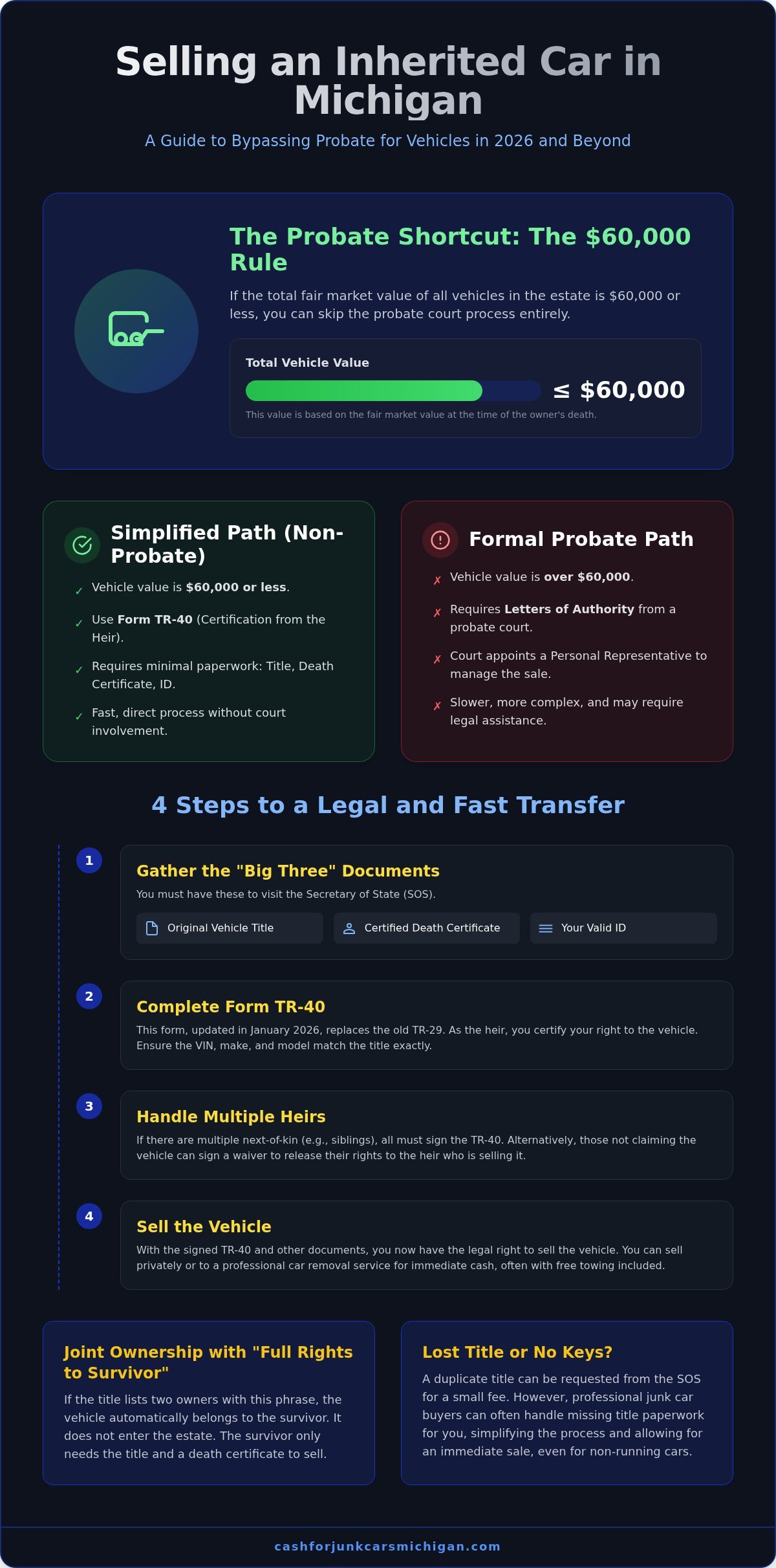
The Secretary of State (SOS) allows a simplified transfer if the total value of all vehicles in the estate is $60,000 or less. This is a critical shortcut for heirs. If the combined value of the cars, trucks, or motorcycles stays under this $60,000 limit, you can bypass the probate court entirely. You’ll use the updated TR-40 form, which replaced the older TR-29 form in January 2026, to certify your right to the asset.
Calculations should be based on the fair market value of the vehicles at the time of death. If the estate is small, specifically valued at $53,000 or less for 2026, the entire probate process is simplified. However, even in larger estates, the $60,000 vehicle-specific rule often allows for a rapid title transfer. If the vehicle value exceeds this limit, you must go through formal probate and obtain Letters of Authority before you can sell.
Joint Ownership vs. Sole Ownership
Check the title for the phrase “Full Rights to Survivor.” If this language is present and there are two owners listed, the car doesn’t enter the estate at all. Ownership transfers automatically to the surviving person. The survivor only needs a copy of the death certificate and the original title to sell the car for cash immediately. This is the fastest possible path to a sale.
If the deceased was the sole owner, the law prioritizes the surviving spouse. If there’s no spouse, the next of kin have equal rights to the vehicle. In cases with multiple heirs, everyone must agree on the sale. Anyone who doesn’t want the car must sign a certification waving their rights. This ensures you avoid legal trouble during the estate settlement. Once the TR-40 is signed by the proper heirs, you can legally sell the vehicle to a buyer or a junk car service.
Don’t let an unwanted car sit and lose value while you guess at the law. If the paperwork matches these 2026 thresholds, you can clear the driveway and get paid today. We handle the complex administrative barriers so you don’t have to deal with the SOS office alone.
Step-by-Step Guide to Transferring an Inherited Title
Gather your documents before you head to the Secretary of State. You need the “Big Three” to avoid repeat trips and wasted time. These are the original vehicle title, a certified copy of the death certificate, and your valid driver’s license or state ID. If you’re selling an inherited car in Michigan, having these ready saves hours of frustration and keeps the process moving forward.
If the title is lost, don’t panic. You can apply for a duplicate title at the SOS for $15. However, if the car is in poor condition or non-running, you might not need to wait for a new title in the mail. Professional buyers often have the expertise to handle paperwork for missing titles on the spot. This allows you to get cash immediately without navigating the bureaucracy yourself.
Filling Out Form TR-40 (Formerly TR-29) Correcty
As of January 2026, the Michigan SOS has fully transitioned from Form TR-29 to Form TR-40. This is the “Certification from the Heir to a Vehicle.” You must list the year, make, and VIN exactly as they appear on the title. Common mistakes like typos in the VIN or missing signatures will cause an immediate rejection. Only the next of kin or surviving spouse is legally authorized to sign as the heir. If there are multiple heirs with equal rights, each person must sign the form or provide a written waiver to allow the sale.
The Role of the Death Certificate
The SOS requires a certified copy of the death certificate with a raised seal. Photocopies are not accepted for title transfers. If the funeral home didn’t provide enough copies, you can obtain more from the County Clerk’s office where the death occurred. Most offices charge a small fee for these records. The date of death on this document is vital because it starts the 15-day clock for title transfers to avoid late fees. Following the official Michigan Secretary of State title transfer process ensures you stay compliant with state law and avoid penalties.
Schedule your SOS appointment online to skip the lines. Michigan offices now prioritize digital bookings for title work, which can save you a whole afternoon. If you want to skip the office entirely and avoid the paperwork, you can sell your inherited vehicle for cash today. We specialize in selling an inherited car in Michigan and can handle the removal and the documentation in one visit. This is the most efficient way to settle this part of the estate without any legal trouble.
Probate vs. Non-Probate: Which Path Applies to You?
Deciding between probate and non-probate depends on the total value of the assets left behind. If the estate is already going through the court system, you must follow formal procedures for selling an inherited car in Michigan. If the estate is small, you can often skip the courtroom entirely. This choice determines how quickly you can get cash for the vehicle and clear out the garage.
Selling a Car from a Probated Estate
When a court opens a probate case, they appoint a Personal Representative (PR). This person receives “Letters of Authority.” This document is your proof of legal power. You cannot sell the car without it. Any buyer, whether a private party or a professional service, will demand to see a certified copy of these letters before handing over payment.
The PR signs the back of the title exactly as their name appears on the court documents. They must add the initials “P.R.” after their signature to show they are acting for the estate. Most importantly, the sale proceeds must go into a dedicated estate bank account. Do not accept payment in your own name. Keeping the funds separate ensures you avoid legal trouble during the final estate settlement. Probate can take months, but once you have your Letters of Authority, the car sale can happen in a single day.
Avoiding Probate for Low-Value Junk Cars
Many heirs find that the cost of probate outweighs the value of the vehicle. For older models or wrecked vehicles, the scrap value might be lower than the court filing fees. Michigan’s simplified rules for vehicles under $60,000 are designed for this exact scenario. You can use the “Transfer by Cost” method for older vehicles where registration fees are based on age rather than value, further simplifying the paperwork for the buyer.
Comparing the cost of probate versus the scrap value of the car is a vital step. If you’re dealing with a non-running vehicle that isn’t worth a lengthy court battle, you can learn how to sell my junk car to save time. We specialize in these fast transactions and handle the administrative barriers for you. Selling an inherited car in Michigan doesn’t have to be expensive. We buy cars in any condition and provide free towing across the state. This keeps the process simple and puts cash in your hand immediately without waiting for a judge’s signature.
Selling Your Inherited Car: Private Sale vs. Junk Car Service
Choosing the right buyer determines how much time you waste. A private sale might promise a higher price on paper, but the reality is weeks of ghosted messages and legal headaches. If you’re selling an inherited car in Michigan, you’re dealing with more than just a simple transaction. You’re managing an estate asset that carries specific state requirements. Most heirs want the vehicle gone quickly to settle the estate, but the private market moves at a snail’s pace.
The speed comparison is stark. A typical private sale takes four weeks to find a serious buyer, negotiate, and finalize the paperwork. Professional junk car services can complete the entire process in under 24 hours. When you factor in the time spent answering phone calls and meeting strangers, the “higher price” of a private sale often disappears into lost wages and stress.
Why Private Buyers Avoid Inherited Vehicles
Private buyers are naturally suspicious of titles that aren’t in the seller’s name. They fear “title jumping,” which is illegal in Michigan. This happens when someone sells a car without first titling it in their own name. Most individuals won’t touch a car if the owner listed on the title is deceased. They don’t want to wait while you visit the SOS or hunt for a death certificate. They want a clean, simple title transfer they can complete the same day.
Selling on Facebook Marketplace or Craigslist carries legal risks. If you misrepresent your authority to sell, you could face litigation from other heirs or the estate’s creditors. If the car doesn’t run, the pool of private buyers disappears almost entirely. Most people aren’t looking for a project that requires a trailer and probate paperwork. You might spend hours researching selling car for parts only to realize the logistics and legal liabilities are a nightmare for a solo seller.
Benefits of a Professional Junk Car Buyer
Professional buyers specialize in these exact scenarios. We understand Michigan estate law and the 2026 TR-40 requirements. We don’t need you to have everything perfect before we arrive. We accept vehicles regardless of their physical condition or mechanical state. This is the definitive solution for heirs who want a clean break from an unwanted asset.
Working with a professional service provides immediate financial gain and complimentary logistical support. We handle the administrative barriers for you. Our process includes:
- Immediate cash payments on the spot.
- Expert handling of estate and title documentation.
- Free towing from any location in Michigan.
- No-hassle pickups for wrecked, non-running, or junk cars.
Don’t let an unwanted vehicle sit and rot while you wait for a private buyer who may never show up. You can get a cash offer for your inherited car today and have it removed from your property by tomorrow. We remove the administrative burden and the physical asset in one quick, efficient visit.
How to Get Cash for an Inherited Junk Car Today
You’ve handled the legal research and gathered the required documents. Now it’s time to finish the job. Selling an inherited car in Michigan doesn’t require a middleman or a long waiting period. You can turn that unwanted vehicle into liquidity in a single afternoon. Our process is designed for speed and reliability, focusing on immediate results for heirs who want to move on. As you work through the probate process, Memorabilia Brokers can also help if you find other collectibles like vintage comics among the estate’s belongings.
Getting a price for the vehicle is the fastest part of the process. You need to provide four basic details: the year, make, model, and approximate mileage. Be direct about the car’s condition. If the engine doesn’t start or the body has significant rust, tell us. We buy vehicles in any state, from wrecked SUVs to non-running sedans.
Make sure to disclose the inherited status during the initial call. This allows our team to confirm that the 2026 TR-40 paperwork is ready for a smooth hand-off. Cash For Junk Cars Michigan offers competitive rates because we specialize in the local market. We don’t guess at values. We provide a firm offer based on the current scrap and parts market, ensuring you get the best possible payout for the estate’s asset.
Free Towing and Same-Day Pickup
Our service area is extensive. We provide coverage across the state, from the streets of Detroit to the neighborhoods of Grand Rapids and everywhere in between. You don’t have to worry about the logistics of moving a junk car. We include free junk car removal with every transaction. In most regions, we can schedule a pickup for the same day you call.
Prepare the vehicle before the tow truck arrives. Clear out all personal belongings from the cabin, trunk, and glovebox. Check under the seats for any estate documents or sentimental items that might have been left behind. When our driver pulls up, the hand-off is simple. We verify the title and the heir certification, you sign the document, and we hand you cash on the spot. There are no checks to mail and no waiting for funds to clear.
Once the car is loaded onto the trailer, your responsibility ends. We take the vehicle and the administrative burden associated with it. You’ve successfully navigated selling an inherited car in Michigan without the typical stress of dealership trade-ins or private buyer scams. This is the most efficient way to settle this portion of the estate and put cash directly into the estate’s accounts today.
Clear Your Driveway and Settle the Estate Today
Once the estate is settled and you’re ready to replace the vehicle, finding a reputable dealer is the next logical step. Even if you’re outside the Michigan area, you can visit GMC of Vacaville to explore a wide selection of new and used trucks and SUVs from a trusted automotive source.
You now have the exact blueprint for selling an inherited car in Michigan without the typical probate delays. By using the $60,000 vehicle threshold and the updated TR-40 form, you can skip the courtroom and head straight to a sale. Don’t let an unwanted asset sit and lose value while you navigate SOS appointments or deal with flaky private buyers. You’ve learned how to identify joint ownership and how to handle missing titles with professional help.
The fastest way to finish this process is to work with experts who understand Michigan’s 2026 estate laws. We provide free Michigan-wide towing and often offer same-day pickup for vehicles in any condition. You don’t need to worry about repairs or cleaning out the car. We pay cash on the spot and handle the administrative barriers for you.
Get an Instant Cash Offer for Your Inherited Car Now and turn that problematic vehicle into immediate liquidity. It’s time to check this task off your list and move forward with confidence.
Frequently Asked Questions
Can I sell an inherited car in Michigan without a title?
You can sell the vehicle, but the Michigan Secretary of State requires a title for a legal transfer. If the original is missing, apply for a duplicate title for $15 at any SOS office. Professional buyers often handle the administrative work for missing titles on your behalf. This is the fastest way to get cash for selling an inherited car in Michigan when paperwork is lost.
What is the Michigan SOS Form TR-29 and when do I need it?
Form TR-29 was the old Certification from the Heir to a Vehicle, but the SOS replaced it with Form TR-40 in January 2026. You need this documentation when the owner’s estate isn’t going through probate. It allows the surviving spouse or next of kin to transfer the title legally. This form only works if the total value of all vehicles in the estate is $60,000 or less.
How much does it cost to transfer a deceased person’s car title in Michigan?
The standard fee for a title transfer is $15. You can pay an extra $5 for an instant title if you need it today. Michigan charges a late fee of $15 or $20 if you don’t transfer the title within 15 days of the owner’s death. Sales tax is typically not collected when the vehicle is transferred to an immediate family member like a spouse or child.
Do I need a lawyer to sell my dad’s old car after he passes away?
You don’t need a lawyer if the vehicle value is under the $60,000 threshold for simplified transfers. Michigan law allows heirs to use Form TR-40 to handle the sale themselves. This process avoids the expense and time of formal probate court. If the estate is large or complex, a lawyer might help, but for most junk cars, a professional buyer handles the paperwork for you to keep things simple.
Can I sell the car if there are multiple heirs in Michigan?
Yes, you can sell the vehicle, but all next of kin have equal rights to the asset. Every heir must agree to the sale. Those who do not want the car must sign a certification stating they waive their interest. This prevents legal disputes during the estate settlement. Once you have everyone’s signature on the TR-40 form, the process for selling an inherited car in Michigan becomes straightforward and fast.
What happens if I sell an inherited car without going through the SOS first?
Selling a car without updating the title through the SOS is called title jumping, which is illegal in Michigan. You must legally transfer ownership to yourself or use the heir certification process before the sale is final. Doing this incorrectly can lead to fines or legal liability if the new owner is involved in an accident. Always ensure the paperwork is filed correctly to protect yourself from future estate trouble.
How long do I have to transfer the title after the owner dies in Michigan?
You have 15 days from the date of death to transfer the title without paying a late fee. After this window, the SOS charges a penalty of $15 or $20. Acting quickly is the best way to avoid these extra costs. If the car is non-running, scheduling a same-day pickup with a junk car service ensures you meet the legal requirements and get paid before fees eat into your profit.
Will a junkyard buy a car if the owner is deceased?
Professional buyers will purchase the vehicle if you provide a certified death certificate and the completed TR-40 form. We specialize in buying cars from estates and handle the administrative barriers that often stop private buyers. Condition doesn’t matter; we buy wrecked or junk vehicles and provide free towing across the state. This is the most efficient way to turn a problematic inherited asset into immediate liquidity without any unnecessary fuss.