

Did you know that 95% of all end-of-life vehicles in the United States are recycled every year? Even with so many cars being scrapped, many Michigan owners still lose hundreds of dollars because they don’t know the specific mistakes to avoid when junking a car. You want that eyesore out of your driveway, and you want the money in your hand right now. It is stressful to worry about shady dealers or hidden towing fees that eat your profit.
We understand that you need a fast and reliable way to turn your old vehicle into liquidity. This guide shows you how to bypass common pitfalls to secure the highest cash payout and a clean legal break from your car. You will learn how to handle Michigan title laws, why you must remove your license plates, and how to avoid identity theft. We walk you through the essential steps to ensure your 2026 vehicle disposal is profitable, legal, and completely stress-free.
Key Takeaways
- Protect yourself from legal liability by learning how to correctly notify the Michigan Secretary of State of your vehicle sale.
- Identify the critical mistakes to avoid when junking a car, such as falling for “title jumping” or failing to transfer ownership legally.
- Maximize your profit by refusing to pay for towing and avoiding buyers who deduct hidden fees from your initial quote at the curb.
- Secure your identity and follow state law by performing a final cabin sweep and removing your license plates before the tow truck arrives.
- Get a clean legal break and immediate liquidity by choosing a service that provides free towing and handles all administrative details for you.
What Does It Mean to Junk a Car? Understanding the Basics
Junking a car is the process of selling a vehicle for the value of its raw materials and reusable components. You are not selling a mode of transportation. You are selling weight and metal. In the Michigan automotive ecosystem, licensed junk car buyers act as the bridge between your driveway and the industrial recycling cycle. They strip the vehicle of valuable parts and process the rest for scrap. This transaction turns a stagnant liability that takes up space into immediate liquidity. Understanding this process is the first step in identifying the common mistakes to avoid when junking a car.
Licensed buyers are essential for a legal transaction. They ensure the vehicle is decommissioned correctly. This protects you from future liability if the car is used illegally after it leaves your property. By selling to a professional, you ensure the VIN is handled according to state regulations. It is a clean, final break from the asset. You stop paying insurance and registration fees on something you don’t use. It is the fastest way to clear your property and put cash in your pocket.
Junk vs. Salvage vs. Used: Which One Is Your Car?
Determining the status of your vehicle comes down to simple math. A used car is a functional vehicle with a resale value higher than the cost of necessary repairs. A salvage vehicle often has a title brand indicating it was a total loss, but it might still be rebuildable. By 2026 market standards, if your repair bill exceeds the total value of the car, it has reached its end of life. A junk car is any vehicle whose primary value lies in its scrap metal and salvageable parts.
The average age of vehicles on U.S. roads reached a record 12.8 years in 2025. This trend continues in 2026, meaning more cars are hitting the junk threshold every day. If your transmission is gone or the body is heavily rusted, trying to sell it as a used car is a waste of time. You want a buyer who values the steel tonnage and the core parts. Don’t let a clunker sit and rot while you wait for a buyer who will never show up.
The Benefits of Professional Junk Car Removal
Selling to a professional buyer is about more than just a check. It is about speed and safety. Professional operations understand What is a Wrecking Yard and how to manage hazardous fluids like oil, coolant, and mercury switches. This protects the Michigan environment from soil contamination. It is the responsible way to dispose of a heavy industrial object that contains toxic materials.
Keeping a derelict vehicle on your property also risks municipal fines. Michigan cities often cite eyesore vehicles as code violations. You can avoid these penalties and the stress of a non-running asset. Choosing a professional service for junk cars provides a source of quick liquidity. You get the cash you need without the wait. Knowing the right way to handle this sale helps you navigate the mistakes to avoid when junking a car.
Administrative Blunders: Navigating Michigan Title and Paperwork Laws
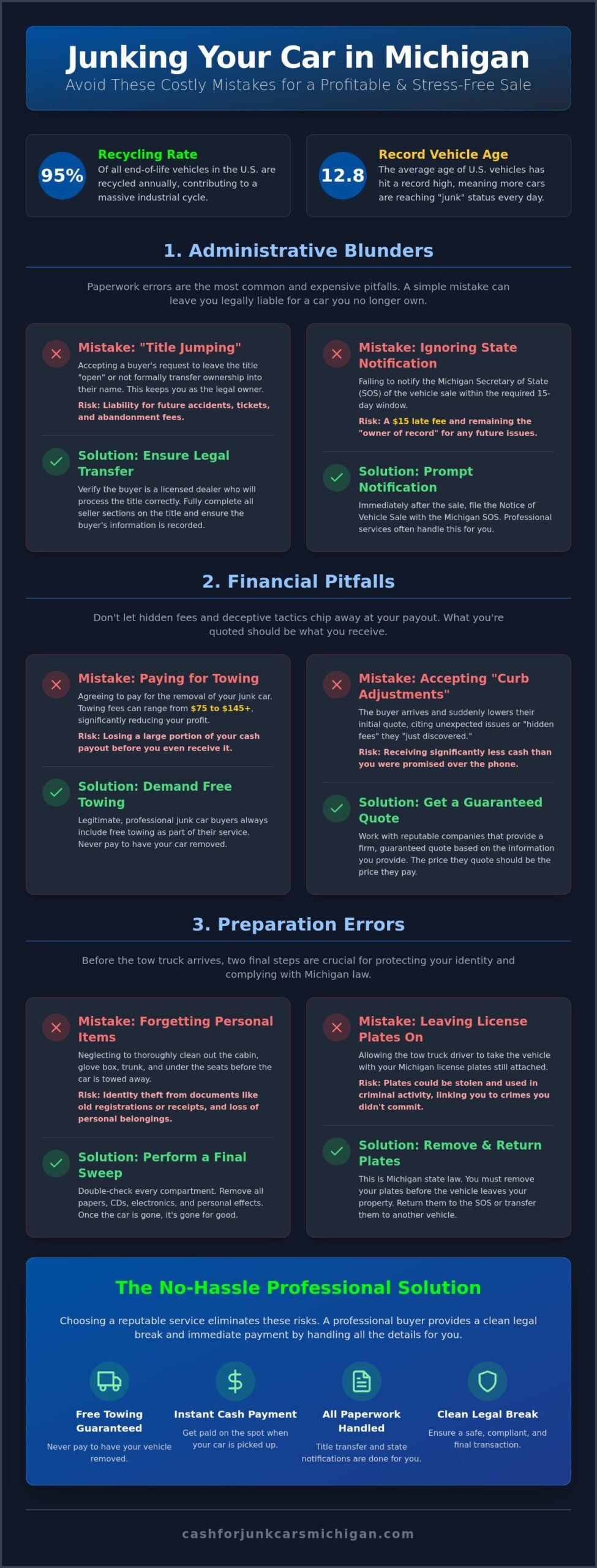
Paperwork errors are the most expensive mistakes to avoid when junking a car. If you don’t transfer the title correctly, you remain legally responsible for the vehicle. This is known as “title jumping” when a buyer refuses to put the car in their name. Never agree to this. If that car is later abandoned or involved in an accident, the Michigan authorities will come to you for towing fees and legal damages. Protecting yourself means following the FTC CARS Rule guidelines to avoid scams and misrepresentations during the sale.
Michigan law requires you to notify the Secretary of State (SOS) within 15 days of the sale. If you miss this window, you face a $15 late fee. Even worse, you remain the “owner of record” in the state database. If the scrap yard doesn’t process the vehicle and it’s found on the side of the road, you are on the hook for the $75 to $145 local towing fee plus daily storage costs. Don’t risk your bank account over a simple form. You can get cash for your junk car from a professional who handles all the Michigan paperwork for you.
When signing over your Michigan pink slip, use blue or black ink only. Any white-out or scribbles will void the document. If you have a salvage title, the process is similar, but you must ensure the buyer is licensed to handle salvage vehicles. Errors here can delay your payment or force you to pay $15 for a duplicate title. Get it right the first time to ensure a fast, legal transaction.
Can You Junk a Car Without a Title in Michigan?
Reputable buyers can often help you if your title is missing. For vehicles 10 years or older and valued at less than $2,500, a title isn’t always necessary if you provide a valid ID and registration. This “no-keys, no-title” scenario is common, but it usually results in a lower cash offer because of the extra administrative work for the buyer. Check this guide on how to sell my junk car for a full checklist of needed documents.
Canceling Insurance and Registration
A major mistake is leaving your license plates on the car when the tow truck arrives. Michigan law requires you to remove your plates at the time of sale. You should also call your insurance provider immediately after the transaction. Don’t pay premiums for a car you no longer own. If you’ve lost your registration, visit an SOS branch or their website to get a replacement before the buyer arrives to avoid delays.
Financial Pitfalls: Towing Fees and Lowball Quotes
Getting a high quote on the phone means nothing if the driver takes a chunk of it for towing fees. This “invisible deduction” is a common tactic among shady buyers. You agree to a price, but when the truck arrives, the driver claims the tow is an extra charge. They subtract that cost from your payout right there on the curb. This is one of the most frustrating mistakes to avoid when junking a car. Professional buyers include removal in their offer. You should never pay out-of-pocket to have your vehicle hauled away. It’s your asset; you deserve the full amount promised.
The law provides a framework for these transactions to keep things fair. The Michigan Vehicle Code junk vehicle laws outline the legal requirements for dealers purchasing end-of-life vehicles. Following these standards protects you from predatory practices. Always demand a guaranteed quote before the driver arrives at your Michigan home. Don’t settle for the first number you hear. Check current scrap car prices before you call. In 2026, complete car bodies in Michigan are fetching between $190 and $225 per ton. If your quote seems low, it’s likely because the buyer is trying to maximize their own margin at your expense.
How to Get an Accurate Instant Quote
To get the best price, have your information ready. You need the year, make, model, and a clear description of any major damage. Be honest about missing parts. A complete vehicle is worth much more than a stripped shell. Removing the catalytic converter, for example, can drop your payout by hundreds of dollars due to the loss of precious metals like platinum and rhodium. Use a cash for junk cars tool to benchmark your vehicle’s value. The average cash offer in Michigan for 2026 is currently around $531, though trucks and SUVs can often bring in over $600.
Avoiding Last-Minute Haggling
Choose buyers who offer cash on the spot. Bait-and-switch tactics are a major red flag. Some buyers will try to lower the price because the car “looks worse than the photos.” This is usually a high-pressure tactic used once the tow truck is already in your driveway. A reputable local Michigan-owned business values its reputation and will stick to the agreed price. National middlemen often sell your lead to the lowest bidder, which increases the chance of a price drop. Stick with a local professional who gives you a firm number and sticks to it for a fast, no-nonsense transaction.
Preparation Errors: Personal Items and Vehicle Stripping
Don’t let the excitement of a fast payout lead to a security breach. You must prepare the vehicle physically and digitally before the tow truck arrives. Rushing this process is one of the biggest mistakes to avoid when junking a car. Follow these five steps to protect your property and your privacy. Taking ten minutes now prevents a massive headache later.
- Step 1: Conduct a final sweep. Check the glovebox, the deep corners under the seats, and the spare tire well in the trunk.
- Step 2: Remove your license plates. You must return these to the SOS or destroy them according to Michigan law.
- Step 3: Clear your digital footprint. Modern infotainment systems store your home address, phone contacts, and garage door codes.
- Step 4: Check for high-value small items. Look for sunglasses, toll transponders, and garage door openers.
- Step 5: Make a final decision. Decide if you are selling car for parts or the whole vehicle.
The Danger of Identity Theft in Junk Cars
Your old car is a data goldmine. Identity thieves look for insurance cards and old registration papers left in the glovebox. These documents contain your full name, address, and VIN. This is enough information to start a fraudulent account in your name. Dispose of these papers by shredding them at home. Don’t leave them for the scrap yard staff to find. Check the CD player and SD card slots too. These often contain personal media or navigation data that you don’t want in a stranger’s hands. Take five minutes to wipe the system to factory settings. It’s a simple step that prevents a major security risk.
Should You Remove Parts Before Selling?
Stripping the car is often a financial error. You might think the new battery or the set of tires is worth selling separately. However, removing these items drastically reduces your scrap value. A “complete” vehicle always commands a higher price than a shell. If you remove the wheels, the buyer has a much harder time loading the car. This might lead to a lower offer or a towing fee because of the extra labor. Only keep aftermarket items like high-end stereos or custom rims if you can replace them with the original factory parts. If you want the most money today, leave the car intact. Ready to clear your driveway? Contact us now to get free junk car removal and an immediate cash offer.
The No-Hassle Solution: Why Cash For Junk Cars Michigan Wins
You have learned the common mistakes to avoid when junking a car, but managing the details yourself is time-consuming. We eliminate the entire “Mistake List” by taking the logistics off your plate. Our team handles all Michigan title paperwork and SOS notifications correctly. You don’t have to worry about legal liability or administrative errors. We provide a definitive, no-nonsense service designed for speed and efficiency. You get immediate liquidity without the stress of dealing with shady scrapyard dealers or hidden fees.
Our commitment to free junk car removal means the price we quote is the price you receive. We never deduct towing costs at the curb. We offer same-day pickup across the entire state. Whether your vehicle is in a residential driveway or a commercial lot, we come to you. We provide a “Cash on the Spot” guarantee. There are no checks to wait for and no bank delays. We pay you in person before we hook up the vehicle. This is the fastest way to turn a problematic asset into cash.
Our Simple 3-Step Process
We value your time. Our process is designed to move you from a quote to a clean driveway in hours, not days. This rapid rhythm minimizes friction and encourages an immediate decision.
- Step 1: Get an Instant Quote. Call or text us with your vehicle’s year, make, and model. We provide a firm offer immediately.
- Step 2: Schedule Your Pickup. We work around your schedule. We often provide same-day service in Detroit, Grand Rapids, and surrounding areas.
- Step 3: Get Paid Cash. Our driver arrives, handles the paperwork, pays you on the spot, and tows the car away for free.
Service Areas and Reliability
We operate a reliable, Michigan-owned business that understands local needs. Our coverage extends from the heart of Detroit to the streets of Grand Rapids and everywhere in between. We accept vehicles in any condition. Even if you are missing keys or the title, we can often facilitate a legal sale under Michigan’s older vehicle regulations. We are the dependable problem-solver you need to clear your property and get paid. Stop wasting time with middlemen who don’t show up. Ready to skip the headaches? Get your instant cash offer now!
Turn Your Junk Car Into Immediate Cash
Don’t let a non-running vehicle drain your energy or your wallet. You now know the critical mistakes to avoid when junking a car, from handling Michigan title laws to clearing your personal data. Proper preparation ensures you walk away with the highest possible payout without legal setbacks. You deserve a fast, transparent transaction that respects your time and maximizes your profit. Selling a vehicle shouldn’t be a full-time job; much like using Phones4cash LLC to trade in old electronics, it should be a quick exchange that leaves you with more space and more money in your pocket.
We are ready to help you finish the job. Our team provides Free Towing Included and Same-Day Pickup Available across the state. We ensure you get Cash Paid on the Spot, even if you are facing a No Title? No Problem situation. Stop worrying about administrative hurdles and start enjoying a clean property. We handle the heavy lifting so you can focus on what matters. Take the final step toward liquidity right now. Get Cash for Your Junk Car in Michigan Today!
Frequently Asked Questions
Do I need a title to junk my car in Michigan?
You typically need a clean title in your name to complete the sale. However, Michigan law allows an exception for vehicles at least 10 years old and valued under $2,500. In these cases, you can provide a valid ID and registration to a licensed scrap metal processor. Understanding these legal requirements is one of the key mistakes to avoid when junking a car if you want to stay compliant with state law.
How much do junkyards pay for a car in 2026?
Payouts vary based on the current market value of steel and salvageable components. While the average Michigan offer is around $531, larger SUVs and trucks often fetch over $600. Your final price depends on the vehicle’s weight and whether high-value parts like the catalytic converter are still intact. Complete vehicles always receive the highest possible cash quotes because they contain more recyclable materials.
Will you tow my car for free if it doesn’t run?
Yes, we provide complimentary towing for every vehicle we purchase. You should never pay a removal fee or have towing costs deducted from your initial quote at the curb. We handle the logistics and the equipment needed to haul away non-running cars, trucks, and SUVs from any Michigan location. This ensures you keep the full amount of your cash offer without any hidden logistical expenses.
What happens if I leave my license plates on the junk car?
Leaving your plates on the vehicle makes you liable for any future tickets or impound fees. Michigan law requires sellers to remove their license plates at the time of the transaction. You must either destroy the plates or return them to a Secretary of State branch. Failing to do this is a common error that can lead to unexpected legal headaches and municipal fines long after the car is gone.
How long does the junk car removal process take?
The entire process often takes less than 24 hours from your first call. Once you accept our instant quote, we schedule a pickup time that fits your day. Our drivers are efficient and can usually complete the paperwork and payment in about 20 minutes. We prioritize speed so you can get your cash and clear your property immediately without waiting days for a response.
Can I sell a junk car that has a lien on it?
No, you cannot legally junk a vehicle until the lien is fully satisfied. You must obtain a lien release from the financial institution and have it recorded with the Secretary of State. Reputable buyers require a clear title to ensure they are purchasing the vehicle from the legal owner. Clearing the debt is the only way to move forward with a legal scrap transaction in Michigan.
Do I need to be present when the tow truck arrives?
Yes, the registered owner must be present to sign the title and complete the transfer of ownership. This meeting is also when you receive your cash payment on the spot. If you cannot be there, you may appoint a power of attorney to handle the signature on your behalf. Being present ensures the transaction is handled correctly and you get your money before the vehicle is removed.
What should I do with my insurance after selling the car?
Cancel your insurance policy immediately after the tow truck leaves with your vehicle. Provide your insurance agent with a copy of the bill of sale as proof that you no longer own the asset. This stops your premium payments and protects you from being billed for a car you’ve already scrapped. It is a vital step in making a clean legal break from the unwanted vehicle.